Recent Work



Pond & Excavation Work
Real iron on real central-Illinois jobs.
Pond excavation, dam building and spillways — a new fishing, swimming, or farm pond dug, keyed and outletted. An owner who's actually on the job, real iron, and a straight price. Mattoon, Charleston & the 60-mile radius.
📞 Call (217) 809-0779 Free EstimateA pond that holds water is earthwork plus a dam — and both have to be right, or the whole thing fails the first wet spring. We build new ponds, fix old ones, and pull the silt back out when they go shallow. One owner, one machine, one straight answer.
Brohez Trucking LLC is a Mattoon-based pond builder — the pond diggers and farm pond builders folks across central Illinois reach for when they search "pond diggers near me" or "pond builders near me" and want a real local outfit, not an out-of-town crew. We dig new fishing ponds, swimming ponds, and farm ponds from scratch — read the lay of the land and the watershed feeding it, shape the basin to real depth, and build the dam in compacted clay lifts so it holds. When an old pond silts in, weeds over, or starts losing water, we handle pond cleanout, dam repair, and full pond restoration to bring it back to the depth it was built for.
Plenty of people call us looking for farm pond contractors rather than a pond builder — same job, different word for it. Either way what you're hiring is an outfit that can read a watershed, move the dirt, and key a dam in so it holds. Our ponds are clay-lined and runoff-fed, so the clay on your ground and the acres draining to it decide the pond as much as the machine does.
If you've been searching pond work near me and getting out-of-town outfits, start here. Pond work near me means all of it out of one shop — new digs, dam and spillway builds, dry cleanouts, and repairs — from a Mattoon crew inside a 60-mile radius, so nothing on your estimate is paying a machine to drive across the state. And because the dam is the part that decides whether a pond holds, folks looking for dam builders near me land here too: we key embankment dams into undisturbed ground and build them up in compacted clay lifts, on farm ponds and on multi-acre lakes alike.
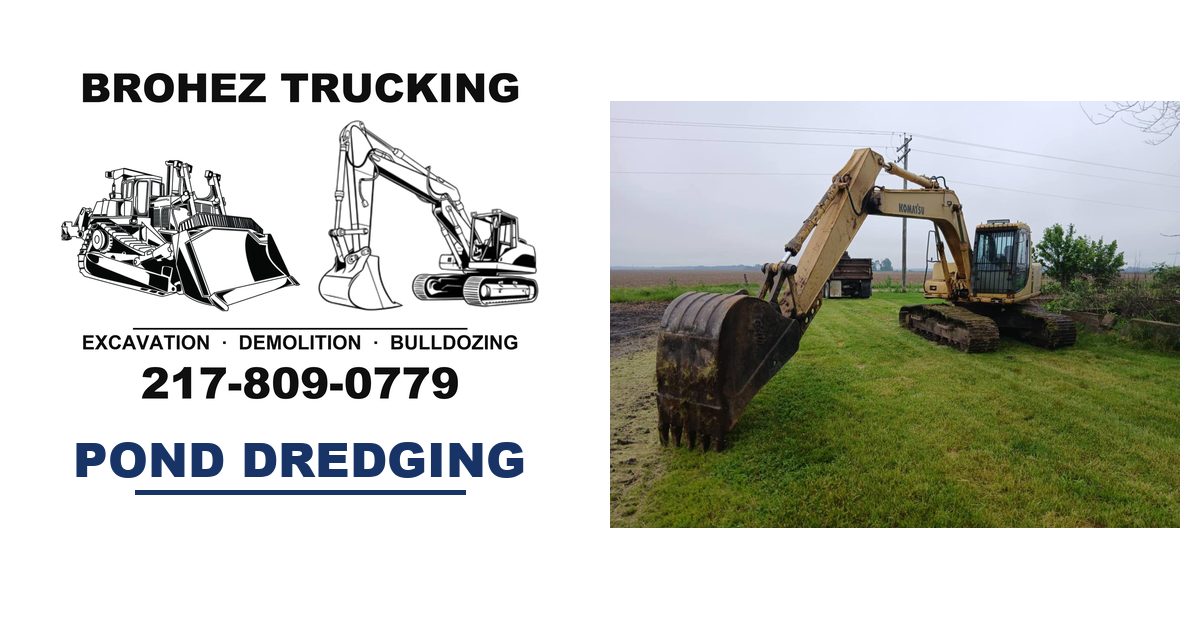
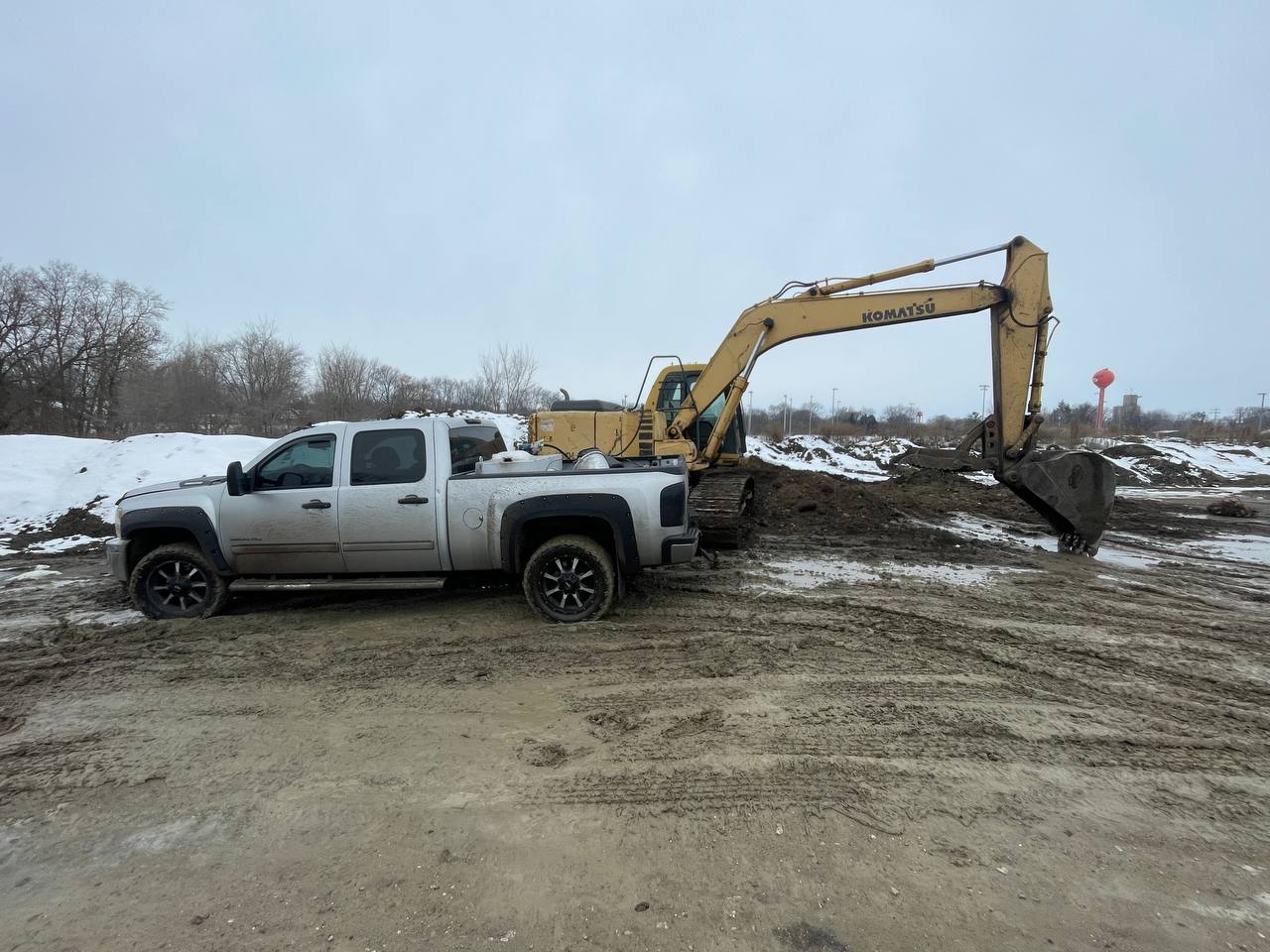
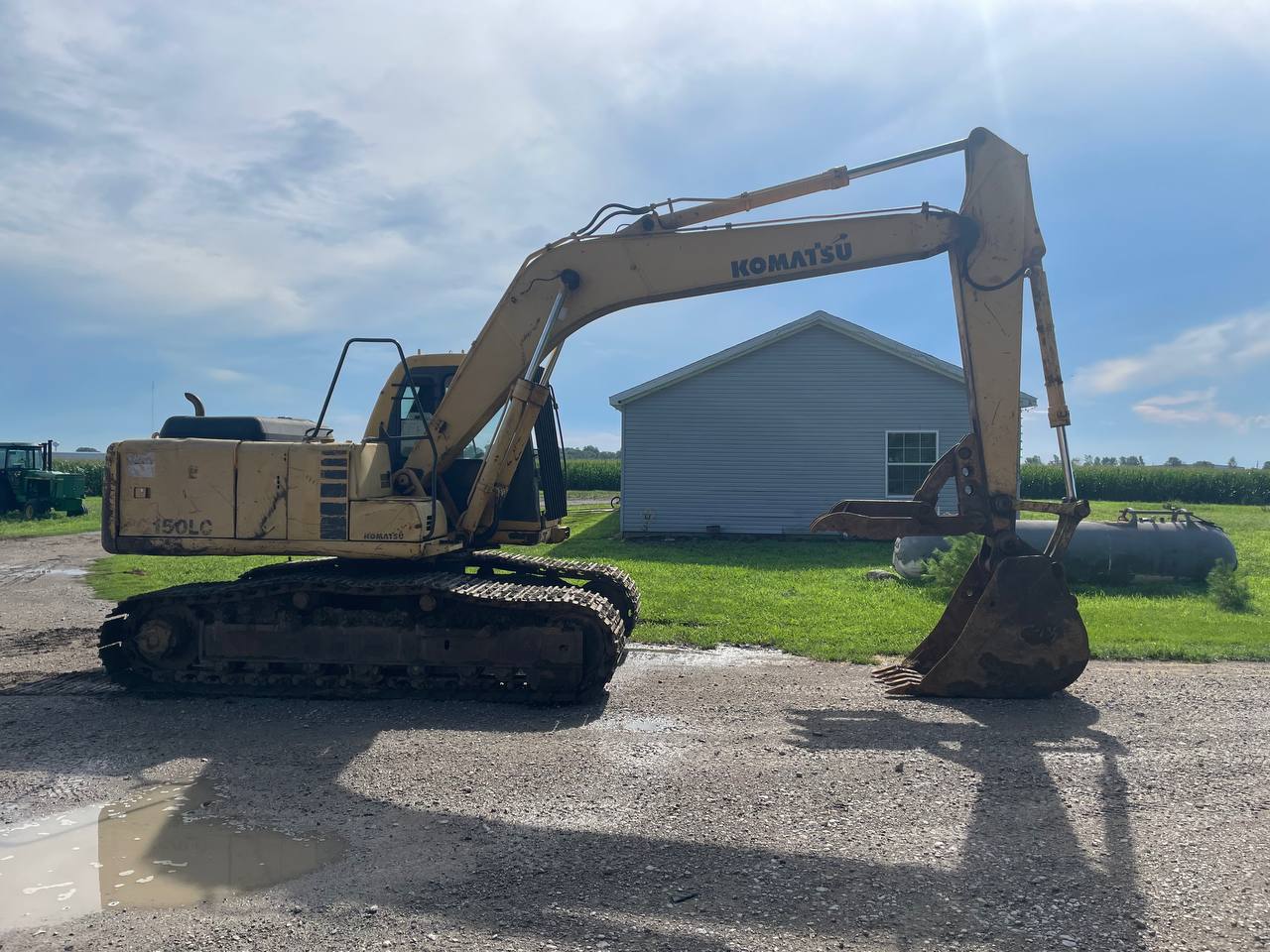
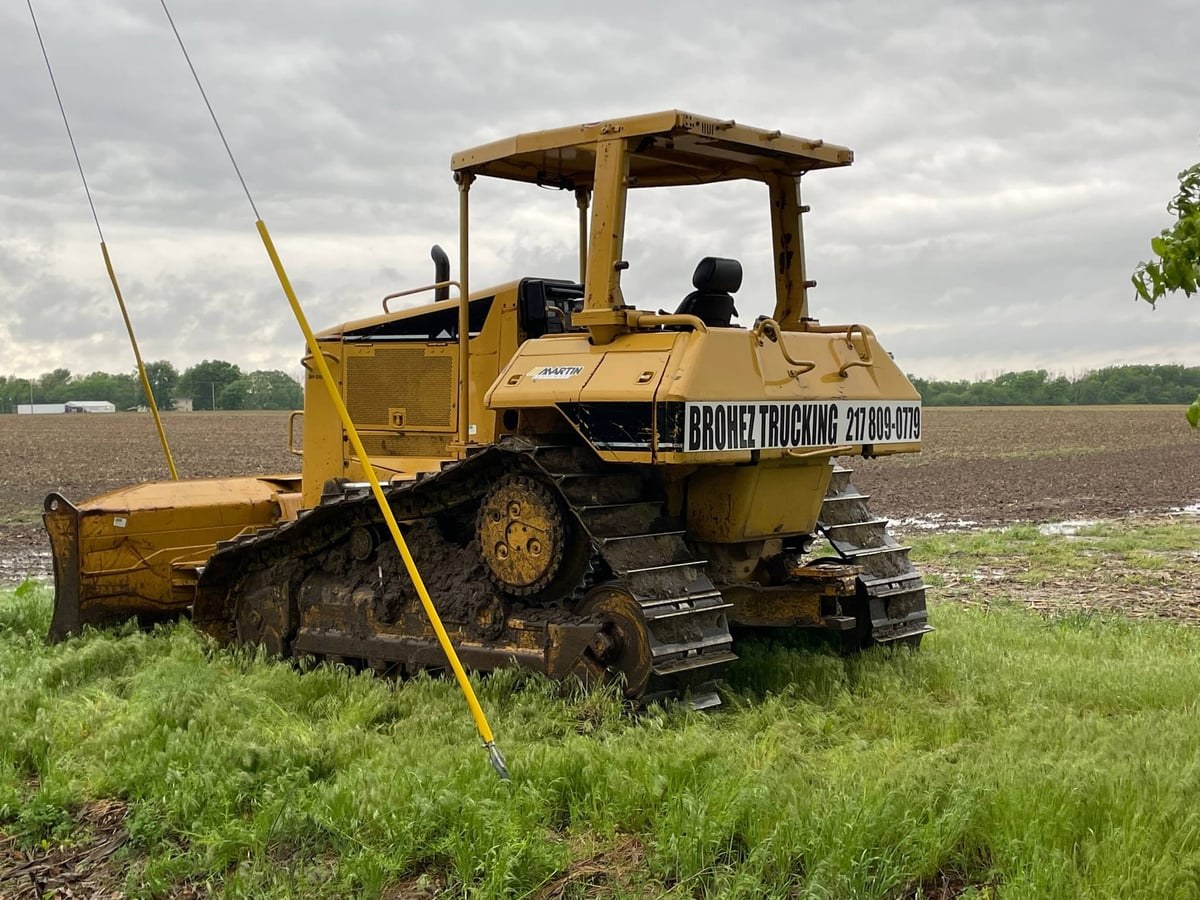
The difference here is simple: you get an owner who's actually on the job, not a salesman who hands it off to a crew you never met. Real local guy, real iron — a Komatsu excavator and a Cat D6N dozer — and a price you can read line by line. We move the earth for you, and we leave the dirt locked in so the next big rain doesn't undo the work.
An existing pond that has silted in gets cleaned out dry rather than rebuilt — that's a different job on a different page. See pond cleanout & depth restoration for how it runs, or what a cleanout takes to get the depth back.
From a brand-new fishing pond to bringing an old farm pond back to life — the full range of pond construction services under one local outfit.
Build a pond from scratch — fishing, swimming, livestock, or irrigation. We size, shape, and key the dam in for real depth that lasts decades, not seasons.
Recreation ponds dug deep enough — at least 8 feet at the deepest point — so fish don't winterkill and the water stays clean instead of growing over with weeds.
A recreational pond is built for how you use it, not just to hold water — bank you can fish from without sliding in, a swimming end deep enough to stay clear, and a shape that reads right from the house. As recreational pond builders we set the deep end, the shelf and the shoreline slope on the walk, because those are decided with the dirt and are expensive to change after.
Livestock water, irrigation source, and wildlife habitat. Sized to your land and your watershed, built to hold through a dry central-Illinois summer.
Silt and muck removal on a drawn-down pond to restore lost depth, plus fallen-tree and debris work. We work the basin dry so the pond gets its real depth back — see pond cleanout. When the basin, dam and spillway all need work at once, that's a full pond rebuild — as a pond rebuild contractor we handle the dam and structure side on pond repair.
The dam is the pond. We key it into undisturbed ground, build it up in compacted clay lifts, and cut an emergency spillway sized to the watershed above it so a wet spring doesn't take it out. Already have a dam that's losing water? That's pond dam repair.
A pond fills from the ground above it. We read the drainage area feeding your spot before we shape anything — too little watershed and it never fills, too much and the spillway runs all year. Sizing comes first, dirt second.
Eroded or caved banks re-cut to a clean, stable edge. Slopes shaped, topsoil returned, and seeded so the pond looks finished, not like a job site.
Brush, trees, and timber cleared off the spot before the dig so the basin and dam go in clean. Land clearing and the pond, handled by one outfit.
Not every pond is a farm pond. A good share of our work is for homeowners on five, ten, or forty acres who want water they can see from the house — a fishing hole for the kids, a swimming pond, or just something that finishes the place. As a residential pond builder the job changes in ways that matter: the equipment has to get in and back out without wrecking a finished yard, the spoil usually has nowhere convenient to go, and the pond has to look right from the deck, not just hold water.
So we plan it that way. We walk the access route before we quote it, mat or rock the path where the ground won't carry a loaded truck, and work the spoil into the surrounding grade so you end up with usable yard instead of a pile. Banks get shaped to a slope that's safe to mow and safe to wade, the emergency spillway gets cut to grade so a hard rain leaves through the spillway and not through your dam, and everything disturbed gets seeded before we pull off. Same clay-lined, runoff-fed build as a farm pond — just built to live next to a house. See pond construction cost, or call for a free on-site walk.
A fishing pond is not just a pond somebody put fish in. What separates one that holds a good population from one that turns into a weed bed by August is decided with the machine, before there is any water in it — and it is almost all about depth and shape.
Depth first. You want a real deep end — at least eight feet, and twelve is better on anything approaching an acre. Two things happen without it. Shallow water warms all the way through in July and the oxygen goes with it, and shallow water grows rooted weed across the whole basin because sunlight reaches the bottom everywhere. A deep hole gives fish somewhere cool to sit in a hot August and somewhere to survive a hard winter under ice. Depth is also the honest reason a fishing pond moves more dirt than a stock pond of the same surface acres — going deeper pulls the whole basin down, not just the middle.
Then the edge — the clay shelf. The shoreline gets cut to a shelf a few feet wide and then dropped off fairly quickly, rather than tapering out into a long shallow flat. That shelf is where you stand and fish from, it is firm clay instead of soft muck, and the quick drop-off behind it is what keeps cattails and rooted weed from marching out into the pond. A pond with a long gentle shallow all the way around is a weed farm with a hole in the middle, and it is very hard to fix later without drawing the whole thing down.
Structure while it is dry. Everything a fish population wants on the bottom is free to put in while the basin is still a hole and the machine is still sitting there — a rock pile or two, a few stumps or root wads anchored down, a hump or a ridge left standing partway out, a channel through the deep end. Try to add any of it after the pond fills and it becomes a boat, a winch and a bad afternoon.
The rest is the same as any pond we build: clay-lined and runoff-fed, the dam keyed into native clay, and a spillway sized to the whole watershed above it. For what moves the number on one, see what drives the cost of a pond. Stocking and fish management we leave to the people who do it for a living — our part is handing you a basin that is actually built to hold them.
A pond is built out of compacted clay, and clay will not compact wet. That single fact sets the calendar for every pond we build. Dirt placed into a dam at the wrong moisture will not take density no matter how many passes go over it, and a dam that never reached density is a dam that seeps from its first full year — you cannot see it, you cannot test it later without digging it up, and you find out two springs on.
Then there is freeze-thaw. From roughly February into April the frost comes out of central Illinois ground from the top down, which leaves a thawing layer sitting on a still-frozen one with nowhere for the water to drain. Ground that carried a loaded truck in January will not carry a tracked machine in March. Same story in a wet spring without any frost in it at all: the basin turns to soup, the spoil will not stack, and you tear up more ground getting in and out than the work is worth.
So the good window here is late summer through fall — the water table is at its lowest, the clay is workable instead of saturated, and there is enough season left to get seed established before winter. The practical consequence is that the calendar runs ahead of the machine: the ponds that get built in a given fall were walked and laid out in the spring before. If you are thinking about water on the ground, the walk is the part to do early, and it is free.
More on the timing question, including the exceptions: when to build a pond in central Illinois and why saturated ground is worth waiting out.
Search pond builders near me and most of what comes back sells fountains, aeration, koi and backyard water features — landscape ponds measured in feet, built out of a product catalogue. That is a real trade and it is a good one. It is not ours. We are an excavation outfit: the pond we build is measured in surface acres and yards of dirt moved, the equipment list is a dozer, an excavator and a compactor, and the thing that makes it hold water is native clay compacted in lifts.
Which is why the search that actually finds us carries a qualifier on it. Farm pond builders near me, fishing pond builders near me, stock pond excavation, dam builders, lake construction — those are the jobs on our trailers. A cattle pond in a pasture, a fishing pond behind the house, a dry-weather water supply, a dam that has to pass a hundred-year storm without cutting itself out. Nobody is going to hand you a catalogue on any of them.
If what you want is a water feature by the patio, call a landscaper — you will get a better job and a better price. If what you want is water on the land that fills off its own watershed and is still there in thirty years, that is earthwork, and that is the whole of what we do. Not sure which one you have? Tell us what you are looking at and we will say so straight, including when it is not our job.
Half the folks who call us don't search for a pond builder at all — they search pond excavation near me, because what they're picturing is the machine and the hole. Fair enough. That is the biggest single line on the job, and it's worth knowing what it covers before anybody quotes you.
Pond excavation is not just digging a hole and walking away from the pile. Every yard that comes out of the basin has to go somewhere, and where it goes is most of what sets the price. The good clay is not spoil at all — it goes straight into the dam, in lifts, compacted, which is the only reason the pond holds. Topsoil gets stripped and stockpiled separately so it can go back over the disturbed ground at the end instead of being buried under twenty thousand yards of subsoil. What's genuinely left over gets shaped into a berm on site, spread across a field, or hauled off — and those three cost very different amounts.
So the excavation and the dam aren't separate jobs you can price apart. The cut feeds the fill. A basin shaped without any thought to the embankment leaves you buying clay you already owned and paying to move dirt you already dug. That's why we lay out the whole thing at the walk — where the basin sits, where the dam runs, and where the spoil ends up — before a machine ever comes off the trailer.
The bowl itself — cut to real depth with a deep end that won't weed over, shaped with a firm shelf at the edge and a side slope that will hold and mow.
Topsoil and organics come off the footprint first and get stockpiled. Organic material under a dam is a failure waiting to happen, and topsoil is what re-seeds the site at the end.
Clay out of the basin goes into the embankment rather than onto a pile. Balancing the two is the difference between a pond that pays for its own dam and one that pays twice.
Whatever the dam doesn't take gets placed on purpose — a shaped berm, a field spread, or hauled off. It's a design decision with a real number attached, not an afterthought.
An old pond that's gone shallow gets dug back out dry — drawn down, the bottom left to firm up, then the silt taken off to a clean base. That side is pond cleanout.
Getting iron in and out of a wet spot without wrecking the field, then putting the ruts, the topsoil and the seed back the way we found them.
Looking for pond excavation contractors near me in central Illinois — we self-perform all of it out of Mattoon, machines and operator both. What moves the number is on what a pond costs to build, and the walk that puts a real figure on your ground is free.
Searching dam builders near me turns up engineers, marine contractors and a lot of pages about hydroelectric projects. What most people in central Illinois actually need is an earthen embankment across a draw, built by an excavation outfit that will still be twenty minutes away in five years. That is us.
A dam is the only part of a pond that can fail all at once, and it fails for reasons that are decided on the day it's built, not years later. It holds because it reached density — because the material went in at the right moisture, in thin enough lifts, with enough passes over each one. Nothing gets laid in a dam to make it hold. Skip the density and you get a dam that seeps from its first full year, and you cannot see it, you cannot test it afterward without opening it up, and you find out two springs on.
So the sequence doesn't bend: strip the footprint down to firm native ground, cut a core trench keyed into undisturbed material under the centerline, place select clay in lifts and compact each one, dress the faces to a slope that will hold and mow, and set both a principal outlet and an emergency spillway to elevation before the first rain finds them. A dam with no emergency spillway isn't cheaper — it's the one that cuts itself out in the first big storm.
Embankment dams for farm, fishing and recreation ponds — keyed core trench, compacted clay lifts, dressed faces, spillway set to elevation.
Same method, more of everything: a wider core, a longer crest and a spillway sized to a much larger watershed. See lake construction.
The principal outlet through the dam and the emergency spillway cut beside it, both sized to the watershed feeding the pond instead of eyeballed.
Any pipe through an embankment is a seepage path along its own barrel. Collars go on the barrel we actually price, sized to the pipe, welded steel.
Illinois Part 3702 sets the dam-safety trigger on height and storage together. If your dam trips it, we say so before you spend money — engineering isn't our scope.
Leaking, seeping, slumping, or a washed-out spillway on an existing dam is a different job with a different method. That's pond dam repair.
The method in full — the keyway and core trench, the lifts, the outlets and the permit question — is on our pond dam construction page. We build dams across the 60-mile radius out of Mattoon — Coles, Cumberland, Effingham, Douglas, Edgar, Clark, Shelby, Moultrie, Macon and Champaign counties. If the dam is already there and it's the problem, start at dam and spillway repair instead.
Yes. We build embankment dams for lakes and ponds throughout our 60-mile radius out of Mattoon. The dam gets a core trench keyed into undisturbed material, native clay placed and compacted in lifts, faces dressed, and both a principal and an emergency spillway set to elevation. If your dam already exists and is leaking, seeping, or has a washed spillway, that's repair work — see our pond dam and spillway repair page.
Past about two acres you're in lake territory — more dirt, a bigger watershed, and a dam and spillway that have to carry real water. Same skill set that builds a sound farm pond, scaled up to a multi-acre lake. The full picture — new lake construction, recreational and fishing lakes, big embankment dams, watershed sizing and what a lake costs — lives on its own page: lake construction in central Illinois.
If the lake or big dam you already own is the problem instead, that's dam and spillway repair; if it has silted in and gone shallow, that's a dry cleanout.
Whether it's a new fishing pond or a farm-pond cleanout, the steps don't change much.
We look at the lay of the land, the watershed feeding it, the soil, and the access. Honest go/no-go and rough size before any paper comes out. Free estimate.
Stake the perimeter and the dam. Set elevations for the dam top, the spillway, and the deepest pool, and confirm overflow goes somewhere safe.
Topsoil and any brush or trees come off and get stockpiled. The good topsoil goes back on the slopes at the end.
The Komatsu excavator works the basin to real depth. Good clay goes into the dam; bad material gets hauled or stockpiled out of the way.
Compacted clay lifts, properly keyed in, with a pipe or vegetated spillway sized to the watershed. This is the load-bearing part — we don't shortcut it.
Smooth the basin, shape the shoreline, return the topsoil, place riprap where erosion is a risk, seed the slopes. From there it's between you and the next rain.
A pond is a real, custom earthmoving project — not an off-the-shelf number. What it takes to build yours comes down to your land, not a price list. Here's what actually moves the work up or down:
A small farm pond and a multi-acre rec pond are different jobs. More surface and more depth means more dirt to move and more dam to build.
Good clay holds water and keys a dam tight. Sandy stringers or a high water table mean test pits and extra work to get the basin tight — and sometimes the answer is that a pond doesn't belong on that spot.
An open spot near the road is quick. A tight, wet, or far-back site — and how far spoil has to be hauled — adds equipment time.
Brush, trees, and timber on the spot have to come off before the dig. A clear field is less work than a wooded draw.
The dam is the load-bearing part. Compacted clay lifts, a keyed core, and a spillway sized to the watershed are where a pond is made or lost.
Shaping the shoreline, returning topsoil, riprap where erosion is a risk, grading and seeding the slopes so it looks finished, not like a job site.
Every pond is different — that's why we walk your land and give you a straight number, free. See what goes into the cost of a pond, or call (217) 809-0779.
Plenty of outfits will quote your pond. Here's what makes building one with Brohez Trucking different.
Levi runs the machine and answers the phone. The man who quotes your pond is the man who digs it — no handoff to a crew you never met.
Mattoon-based, family-owned, working a 60-mile radius. We know Coles County soils, the moraine, and where the clay turns to outwash sand.
A solid 5-star reputation across central Illinois — fair price, hard work, and no surprises. Read them at our reviews page.
A Komatsu excavator and a Cat D6N dozer that show up running. See the full equipment lineup.
Full liability and equipment coverage. Certificate of insurance available on request, before any work starts.
An itemized quote you can read line by line — equipment hours, volume moved, materials, permits. No mystery line items, no high-pressure close.
A native-clay dam keyed to NRCS-378 spec, real compaction in proper lifts — not just pushed-up dirt — and an engineered spillway sized to your watershed. You build it once and don't fight it again. The value is in the pond that lasts, not the corner-cut.
Verified five-star Google reviews from customers across our excavation, demolition and hauling work in central Illinois. Read them all on our reviews page.
Real iron on real central-Illinois jobs.
Size, depth, soil type, water source, and how easy the spot is to reach with equipment. A small half-acre farm pond is a different job than a multi-acre fishing or swimming pond. We keep the full breakdown on the pond construction cost page, and the only honest way to a real number is a walk on your land — that's what the free estimate is for. Call (217) 809-0779.
Most small farm and fishing ponds run one to three weeks of equipment time when the weather cooperates. Bigger ponds, wet ground, or a lot of land clearing add time. We give you a real timeline at the estimate.
Late spring through early fall is the sweet spot in central Illinois. The ground is drier, the clay compacts better in the dam, and we can shape and seed the slopes before winter. Winter is good for planning, layout, and permits so you're ready to dig when the ground firms up.
Most rural farm and residential ponds in Coles County and the surrounding counties don't trigger an IL DNR dam permit, and they usually fall under the Clean Water Act farm-pond exemption. If ground disturbance tops one acre, an IL EPA NPDES filing is required. We tell you exactly what your job needs before any dirt moves.
If the basin and dam are sound and the pond has just silted in or grown shallow, a cleanout restores depth for far less than a new build. If the dam leaks badly, the spot was never right, or you want it bigger or in a better spot, a new pond makes more sense. We walk it and tell you straight which way pays off. See our pond cleanout & restoration page for more.
We're a Mattoon-based pond builder serving a 60-mile radius across central Illinois — Charleston, Mattoon, Effingham, Decatur, Champaign, Urbana, Sullivan, Tuscola, Shelbyville, Pana, and Terre Haute, plus everywhere in between. Call to confirm if you're near the edge of the radius.
Depth and edge shape, both decided before there is water in it. You want a real deep end — at least eight feet, and twelve is better on anything near an acre — so fish have somewhere cool in July and somewhere to survive under ice in winter, and so sunlight is not reaching bottom across the whole basin and growing weed. The shoreline gets cut to a firm clay shelf a few feet wide that then drops off fairly quickly, which is what keeps cattails from marching out into the pond. Structure — rock piles, anchored stumps, a hump left standing, a channel through the deep end — all goes in while the basin is still dry and the machine is still there, because none of it is practical to add once it fills.
Folks search for this a dozen different ways — pond diggers, pond builders, a pond digging company, dam builders, pond excavation contractors. It's the same job under different names, and it's the job we do. Straight answers to the ones we hear most, from a Mattoon outfit working a 60-mile radius.
If you're within about 60 miles of Mattoon, yes. That covers Charleston, Effingham, Decatur, Champaign, Urbana, Sullivan, Tuscola, Arcola, Shelbyville, Pana, Neoga, Greenup, Toledo, Casey, Windsor, Marshall, Paris, Newton, and across the line to Terre Haute. Levi walks the spot himself and gives you the number — no salesman, no hand-off. Call (217) 809-0779.
Brohez Trucking LLC is a Mattoon-based pond digging company — owner-operated, with a Komatsu excavator and a Cat D6N dozer on our own trailers. We dig new ponds, size them to the watershed, and build the dams that hold them. Because we're local, the machine doesn't come with an out-of-town mobilization bill attached to it.
That's the core of it. A pond is excavation plus a dam — the basin gets cut to real depth, the good clay gets set aside for the dam, and the dam goes in as compacted lifts keyed into undisturbed ground. We do the general excavation and grading around it too, so one outfit finishes the whole site.
There aren't many outfits in central Illinois that build ponds as a main line of work rather than a side job. We do. If you're comparing pond building companies, ask each one who runs the machine, whether the dam gets keyed in, and what happens if it seeps the first wet spring. Then call us and ask the same three. (217) 809-0779.
Yes — fishing ponds are a good share of what we dig. The thing that makes a fishing pond work is depth: at least 8 feet at the deepest point so fish don't winterkill and the whole thing doesn't grow over with weeds by August. We shape the basin with that in mind and seed the banks so it looks finished.
Every one — the dam is the pond. It gets keyed into undisturbed ground and built up in compacted clay lifts, and the emergency spillway gets cut to grade beside it and sized to the watershed feeding the pond instead of eyeballed. If the dam on a pond you already own is leaking or slumping, that's pond dam repair, and here's how a leaking dam actually gets fixed.
We do — both the emergency spillway cut into grade beside the dam and the principal outlet through it. A spillway that's too small, too high, or grown over is the reason a lot of dams wash out, so we size it to the watershed feeding the pond instead of eyeballing it. Fixing one that has already failed is spillway repair.
Same crew, different page. A basin sized to a drainage calculation and built to an engineer's plan sheet is its own kind of work, so it doesn't live here. Everything on it — new basins, silted-in basins brought back to volume, failing outlet structures — is on detention & retention basin construction.
Not every call is a new dig. A good share of the folks who find this page already own the pond — it's losing water, the dam is soft, or it's gone shallow and weedy. Same outfit, same iron, different job. Here's where each one goes:
Not sure which one your pond needs? That's what the free on-site walk is for — Levi looks at it and tells you straight whether it's a repair, a cleanout, or a rebuild. Call (217) 809-0779.
Brohez Trucking LLC builds and restores ponds across a 60-mile radius from Mattoon, IL — into Coles, Cumberland, Douglas, Shelby, Moultrie, Effingham, Edgar, Clark, Champaign, and Macon counties, plus over the line into Vigo County, Indiana. When folks search "pond diggers near me" or "farm pond builders near me" in central Illinois, we're the local pond builder that actually shows up. Pick your town below for local details, or call (217) 809-0779 for a free estimate anywhere in the radius.
About half the people who call us say pond construction and the other half say pond installation. Same job, same crew, same iron — it is only which word you grew up with. It's worth saying out loud, because searching pond installation near me mostly turns up landscape and water-garden outfits who set a rubber-bottomed backyard feature with a pump in it, and that is a different trade from ours. A pond installation here means an excavator and a dozer on your ground for one to three weeks: strip the topsoil off the footprint, key the dam into native clay, cut the basin down to real depth, build a spillway sized to the whole watershed above it, then shape and seed the ground back. If installation is the word you use, you are still in the right place — call (217) 809-0779 and we will walk the spot with you.
Give us the basics and Levi calls you back the same day with a straight number. Rather talk now? (217) 809-0779 or text us.
Walk it with us. We'll tell you what's reasonable for the spot and what it'll take — new pond or cleanout. We move the earth for you.
(217) 809-0779 📞 Call For Free Estimate Contact Us