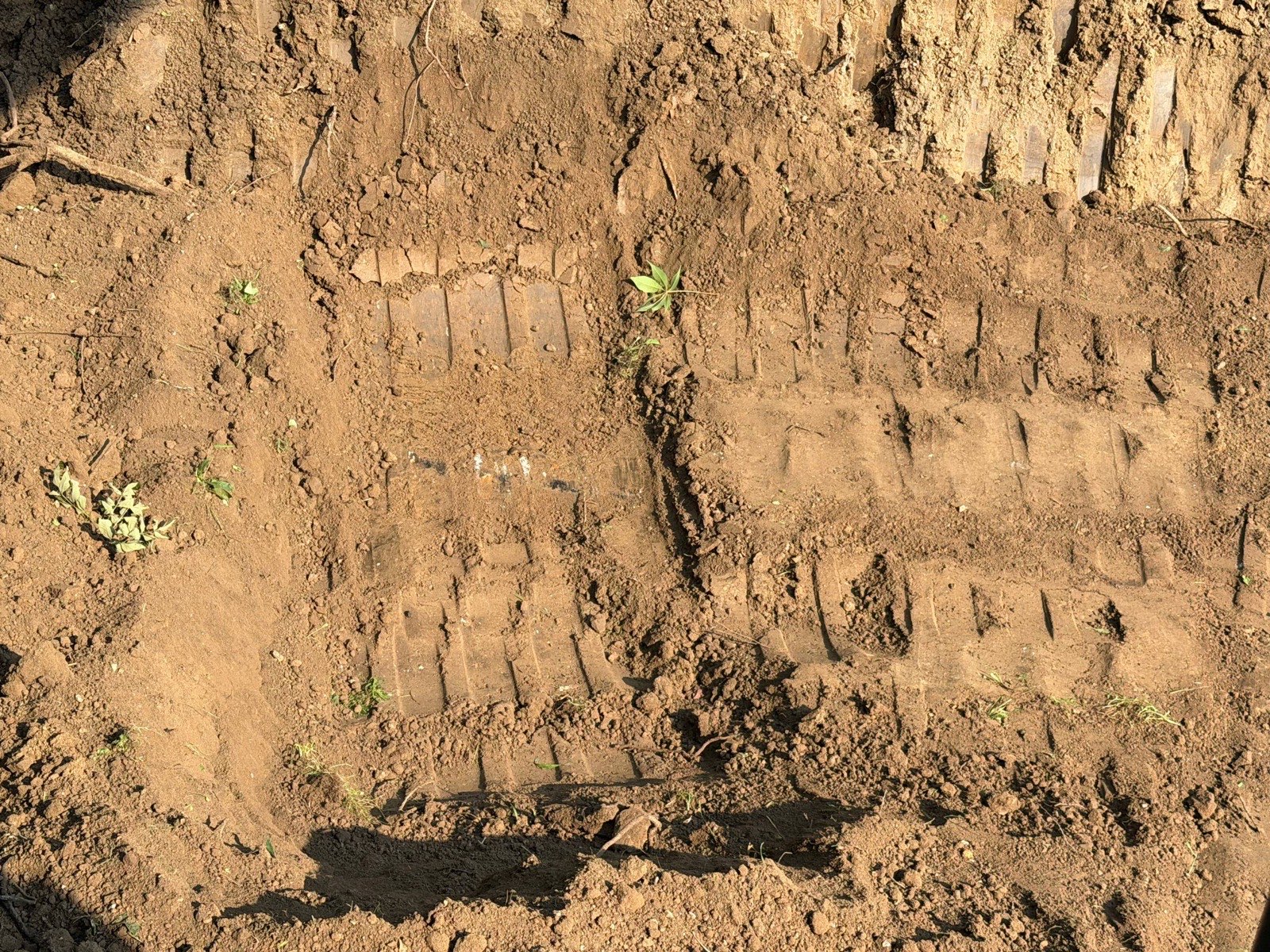
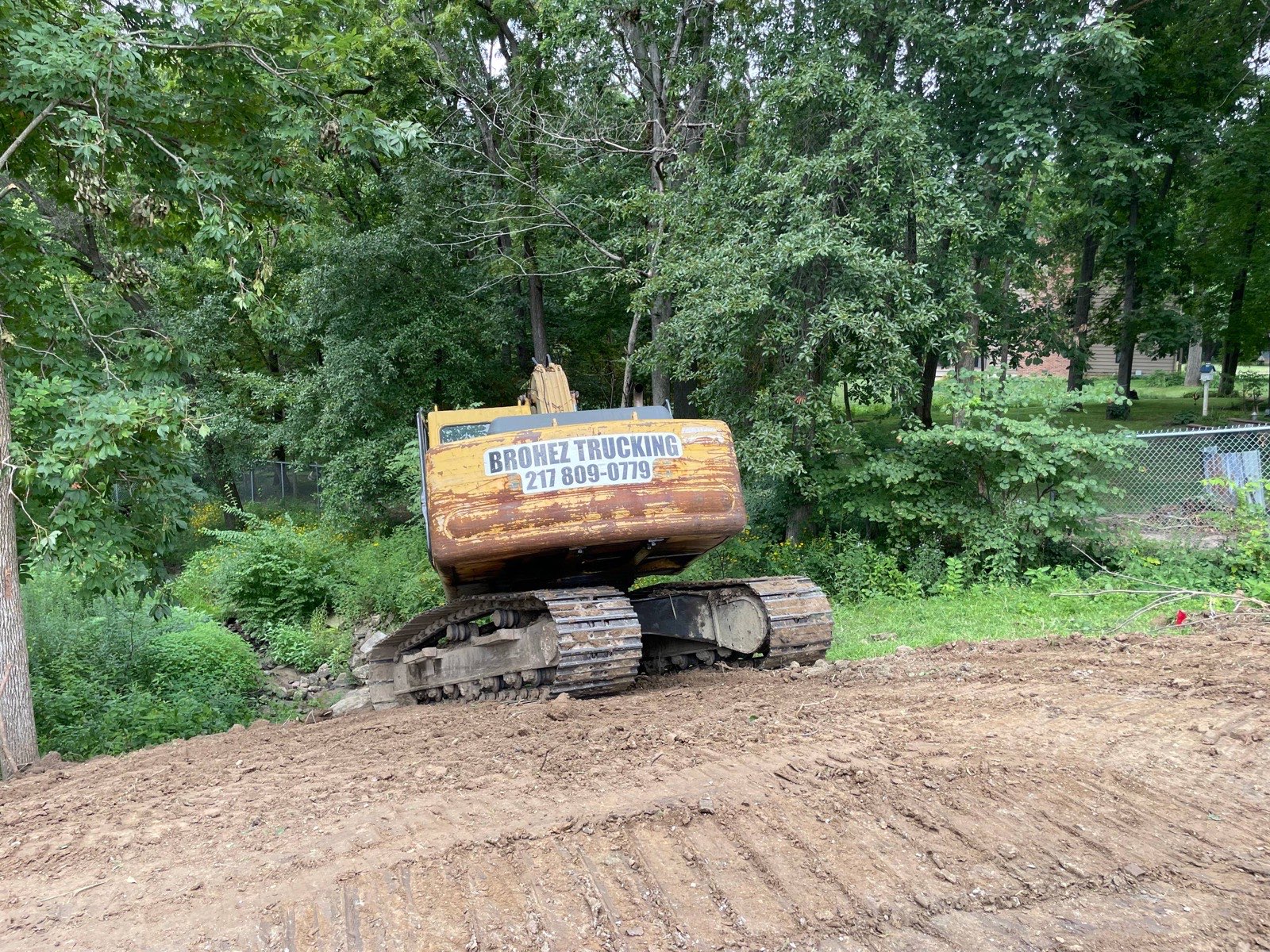
Leaking dam repair, spillway repair, and seepage re-sealing with native clay — plus erosion, bank repair, and full pond renovation. A pond renovation contractor for clay-lined and earthen embankment ponds. If your pond is losing water or the dam's letting go, we find the problem and fix it right. Mattoon, Charleston & the 60-mile radius.
📞 Call (217) 809-0779 Free EstimatePond dam repair, leak sealing, and full pond renovation for clay-lined and earthen embankment ponds across central Illinois. A pond that leaks, a dam that seeps, or a spillway that's washing out won't fix itself — and the longer it goes, the more it costs and the more dangerous the dam gets. Brohez Trucking LLC finds where your pond is actually failing and repairs it the same way a good pond is built: with compacted native clay, keyed in and made to hold.
Most pond problems come down to water going somewhere it shouldn't. A leaking pond is usually losing water through the earthen dam or a spot in the basin the clay never sealed — not straight down. A failing dam shows up as a wet spot or a boil on the downstream face, slumping, or a soft toe. A washed-out spillway gullies deeper every storm until it threatens the whole embankment. And in central Illinois, muskrats and other burrowing animals tunnel through dams and open leak paths that only get worse. We diagnose it, draw the pond down, and rebuild the failed section in clay — re-keyed, re-sealed, and compacted so the fix outlasts the problem.
Pond renovation is the bigger version of the same job: instead of one repair, the whole pond gets brought back while it's drawn down. We re-shape the basin and the slopes, rebuild the dam in keyed and compacted clay lifts to NRCS 378 embankment spec, re-cut and armor the spillway to the watershed it actually has, reset or replace the outlet, pull the silt out in the dry, and finish the banks in topsoil and seed. It's the honest answer for a pond that was built cheap thirty years ago and has been fought ever since — you keep the location and the water you already have and end up with a pond that holds. As a pond renovation contractor we work clay-lined and earthen embankment ponds only, which is exactly the kind we build new.
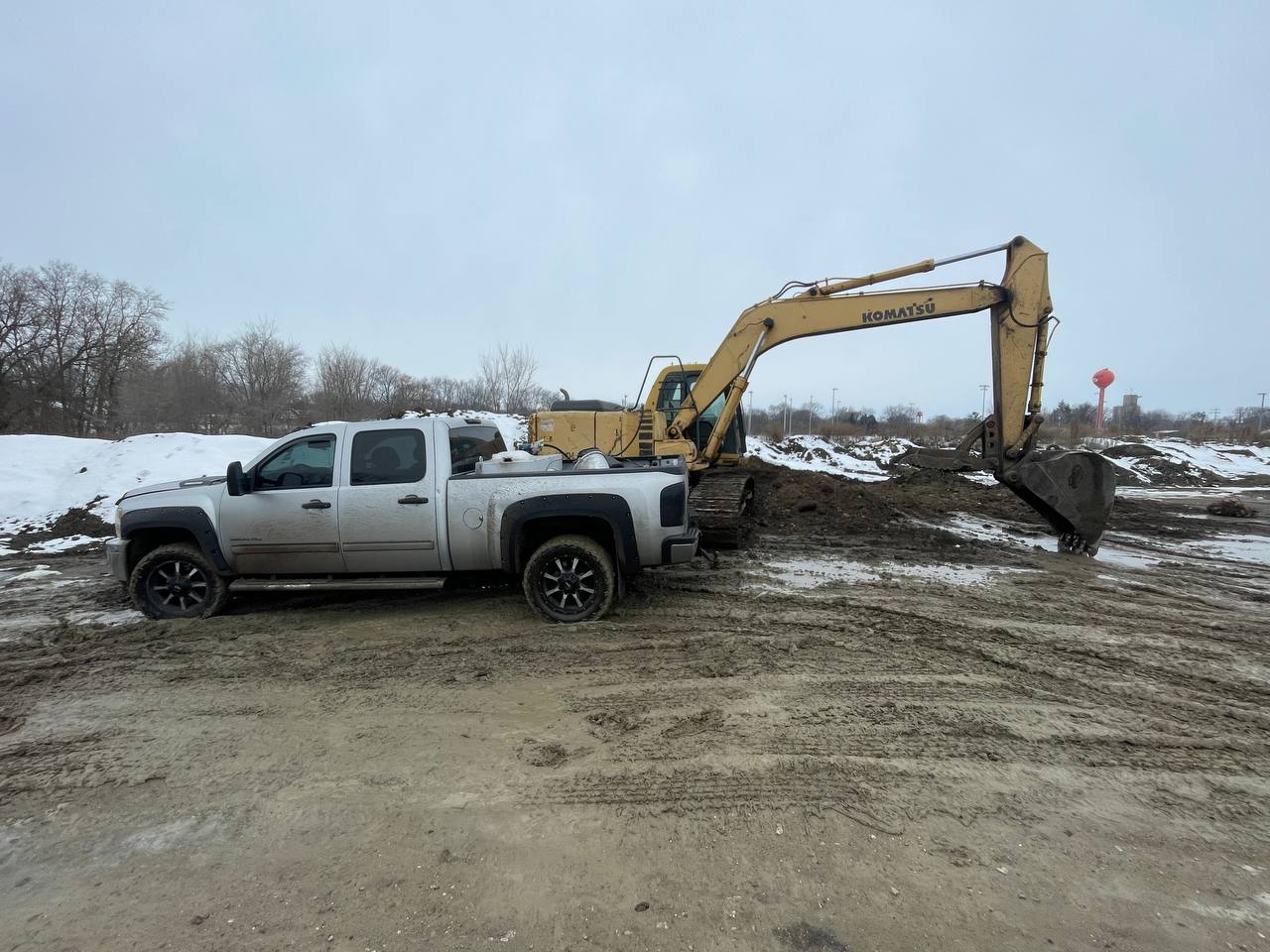
The difference here is the same as on our new builds: you get an owner who's actually on the job, real iron — a Komatsu excavator and a Cat D6N dozer — and a straight, itemized price. Brohez repairs clay-lined and earthen embankment ponds and dams — farm ponds, fishing and rec ponds, livestock and irrigation ponds, and small lakes. That's the kind of pond we build, sealed with native clay and fed by its watershed, so we know exactly how to put one back together when it lets go. We move the earth for you — and we leave the dirt locked in so the next big rain doesn't undo the work.
Plenty of people don't search for pond repair at all. They search dam repair, or how to fix a leaking dam, or just dam seepage — because what they're standing in front of is a wet spot on the back of an embankment and they don't yet know whether it's a nuisance or the start of a failure. Here's the straight version of what that is and what fixing it involves.
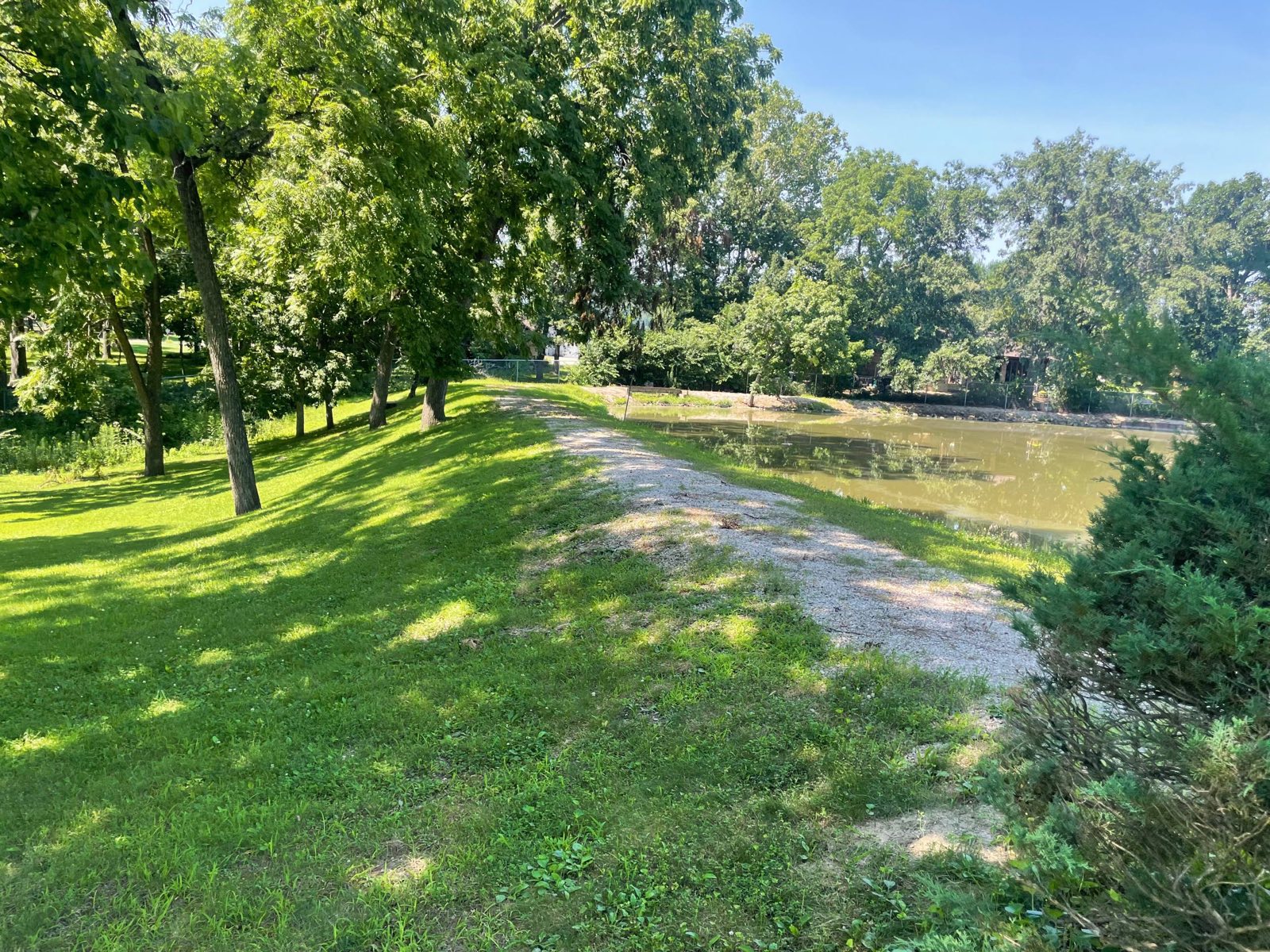
First, scope: we repair earthen embankment dams — the dirt dams behind farm ponds, fishing ponds, rec ponds and small lakes. That's the overwhelming majority of dams in central Illinois. We are not a concrete or hydro outfit, and we'll say so rather than take the job.
A little seepage low on the downstream face is normal on an old dirt dam and always has been. What isn't normal, and what you should act on:
Not from the top, and not with a load of dirt dumped on the wet spot. That's the fix that gets tried first and buys about a season. A dam holds because the material in it reached density — right moisture, thin lifts, enough passes — and a repair has to put density back where it went missing:
The pond being drawn down is the expensive part of any of it, which is why the honest advice is to handle everything the dam needs in one trip. If yours is doing any of the above, call (217) 809-0779 and we'll come look at it — the walk is free, and if it's a damp toe and nothing more, we'll tell you that and leave.
Longer reads: how to fix a leaking pond dam, how a dam and spillway are built, and the best time of year to fix a dam — and if the dam doesn't exist yet, that's dam building.
From a dam that seeps to a spillway that's washing out to a whole tired pond brought back — the full range of pond repair and renovation under one local outfit.
When a pond needs more than one fix, we renovate the whole thing in a single drawdown: re-shape the basin and slopes, rebuild the dam in keyed clay lifts, re-cut and armor the spillway, reset the outlet, and pull the accumulated silt out in the dry. You get the pond you meant to have without starting over on new ground.
A seeping or slumping earthen dam excavated back to solid ground and rebuilt in compacted clay lifts, keyed into a clean core trench so the seepage path is sealed off for good — not just skinned over.
We find where the pond is actually losing water and re-seal it with native clay. A basin spot that never held gets scarified and recompacted to density; a seam that leaks gets cut out and re-keyed. Clay-lined ponds only — the proven, lasting fix.
Spillway erosion is how most of these start — a shallow wash on the flow line that gullies deeper every storm until the emergency spillway can't pass water at all. We re-grade and armor gullied, undersized, or washing emergency spillways, reset or replace principal outlet pipes and risers, and repair the erosion scars in the approach and the discharge channel — sized to your watershed so the big storm passes safely instead of taking the dam.
Rusted, crushed, or pulled-apart outlet and drain pipes that leak along the barrel replaced and re-packed, with the clay compacted back around them so water can't track down the pipe.
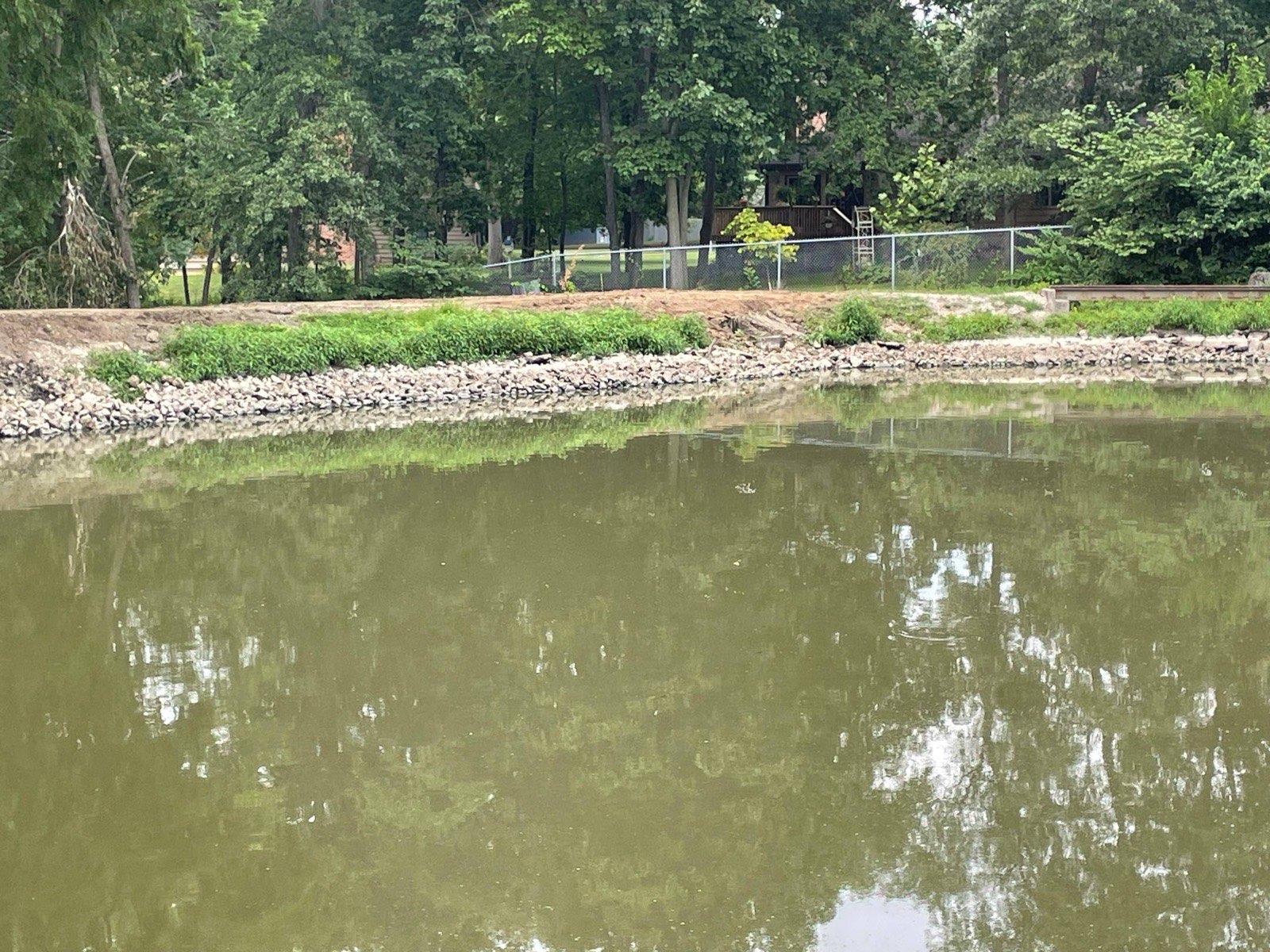
Caved, sloughing, or wave-cut banks re-cut to a clean, stable slope, riprap set where erosion keeps coming back, topsoil returned and seeded so the shoreline holds.
Burrows and tunnels through a dam are a leading cause of leaks and blowouts here. We open up the damaged run, re-pack it in compacted clay, and rebuild the face so the embankment is solid again.
If the real problem is a pond gone shallow with silt and muck rather than a leak, that's a cleanout — see our pond cleanout & restoration page, or what a cleanout takes to get the depth back. While the pond is down for repair is the right time to do both.
When the dam, spillway, and basin have all let go, a full rebuild on the existing footprint often beats chasing one failure at a time. We re-key the dam, rebuild the spillway, and re-seal the basin in one trip.
A dam leak has a cause, and the cause decides the repair. Dumping clay on the wet spot is the one approach that never holds, because the water is already travelling a path you haven't found yet. Here's what dam leakage usually turns out to be in central Illinois, and how we repair each one.
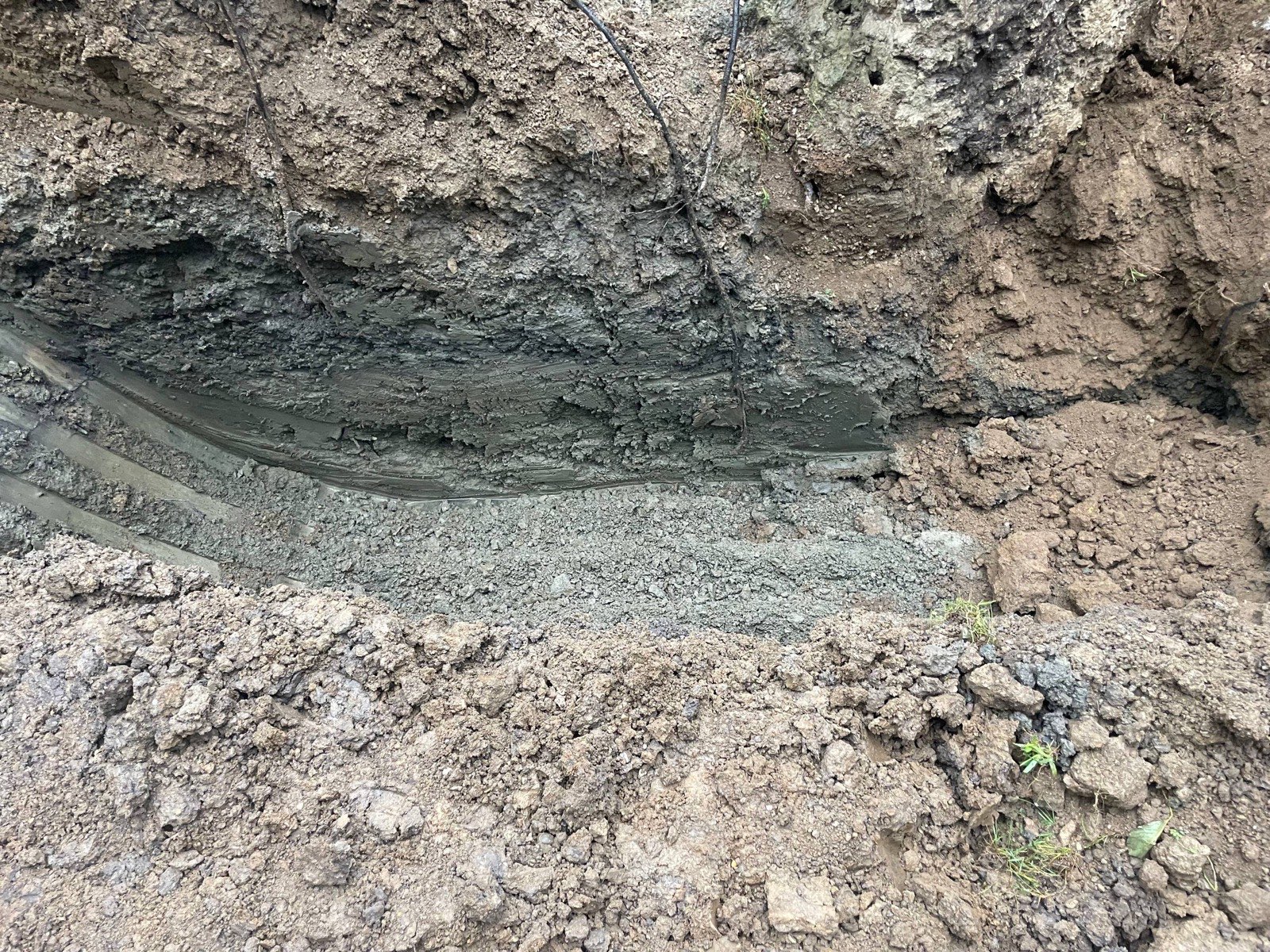
A damp, spongy strip or a green streak low on the downstream face, with clear water. The dam was built out of whatever came out of the hole instead of selected clay, so water works through the fill. The repair is a keyed clay core: we draw the pond down, cut a trench through the dam down into tight, undisturbed ground, and rebuild it in compacted lifts of good clay. That's a real dam repair — it interrupts the path rather than covering the exit.
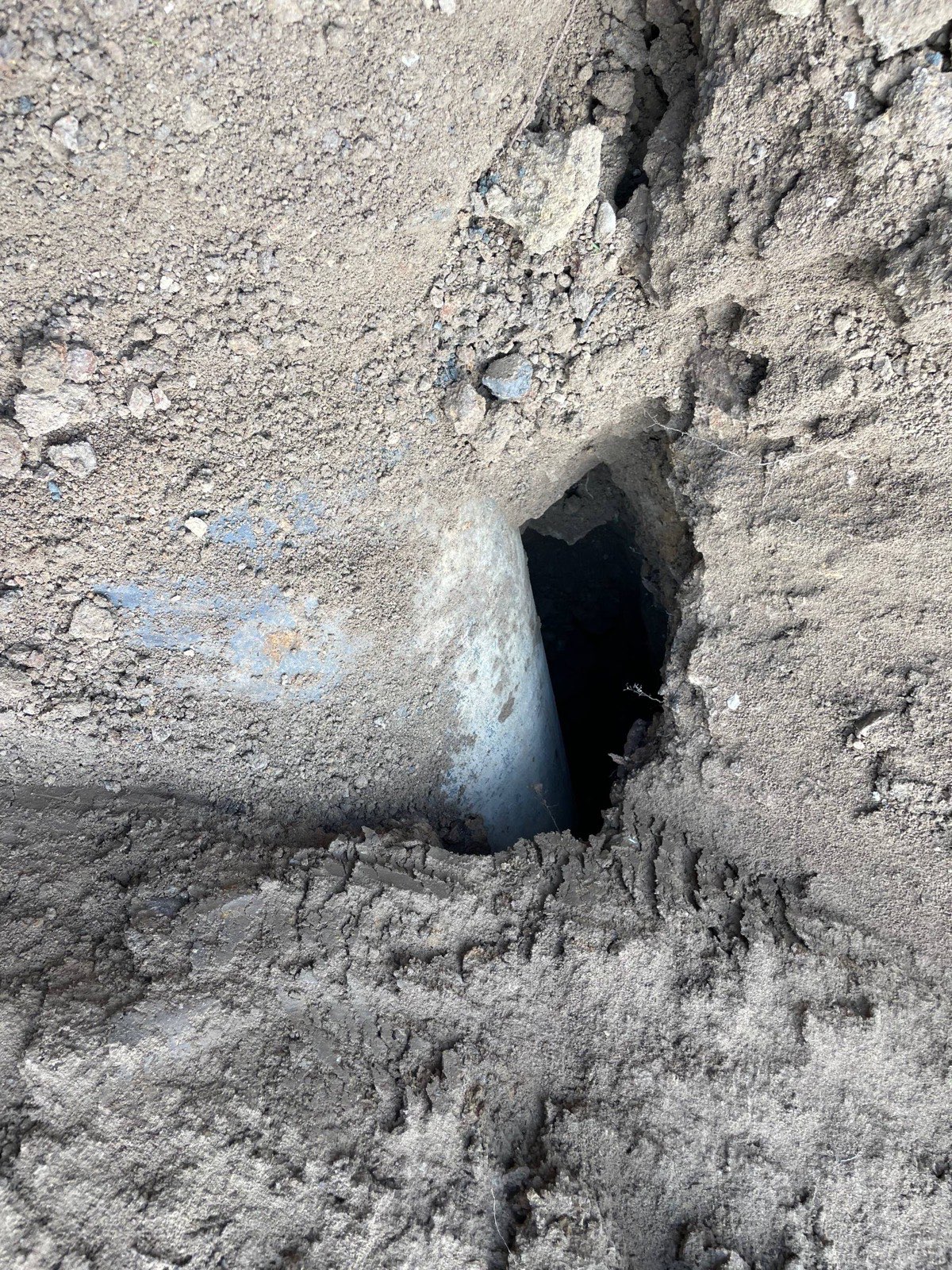
Cloudy or muddy water coming out of one spot, a boil, or a sinkhole on the crest. Water has tunnelled a channel — usually along an old outlet pipe or a rotted tree root — and it carries dam with it every day. This is the dangerous one and it gets worse on its own schedule, not yours. We open the dam on that line, cut the channel out entirely, and rebuild the section in keyed, compacted lifts.
Holes at or just below the waterline on the upstream face, often several in a row. Burrows can run most of the way through a narrow dam. We excavate the tunnelled zone, backfill in compacted clay, and where it keeps recurring we widen and re-slope the upstream face so there's less dam to tunnel through.
Water running out around an outlet pipe instead of through it, or an emergency spillway that has cut a gully down through itself. Both take the dam with them if they're left. We reset or replace the outlet with proper anti-seep collars and re-cut the spillway to grade, sized to the watershed the pond actually has and armored where the velocity calls for it.
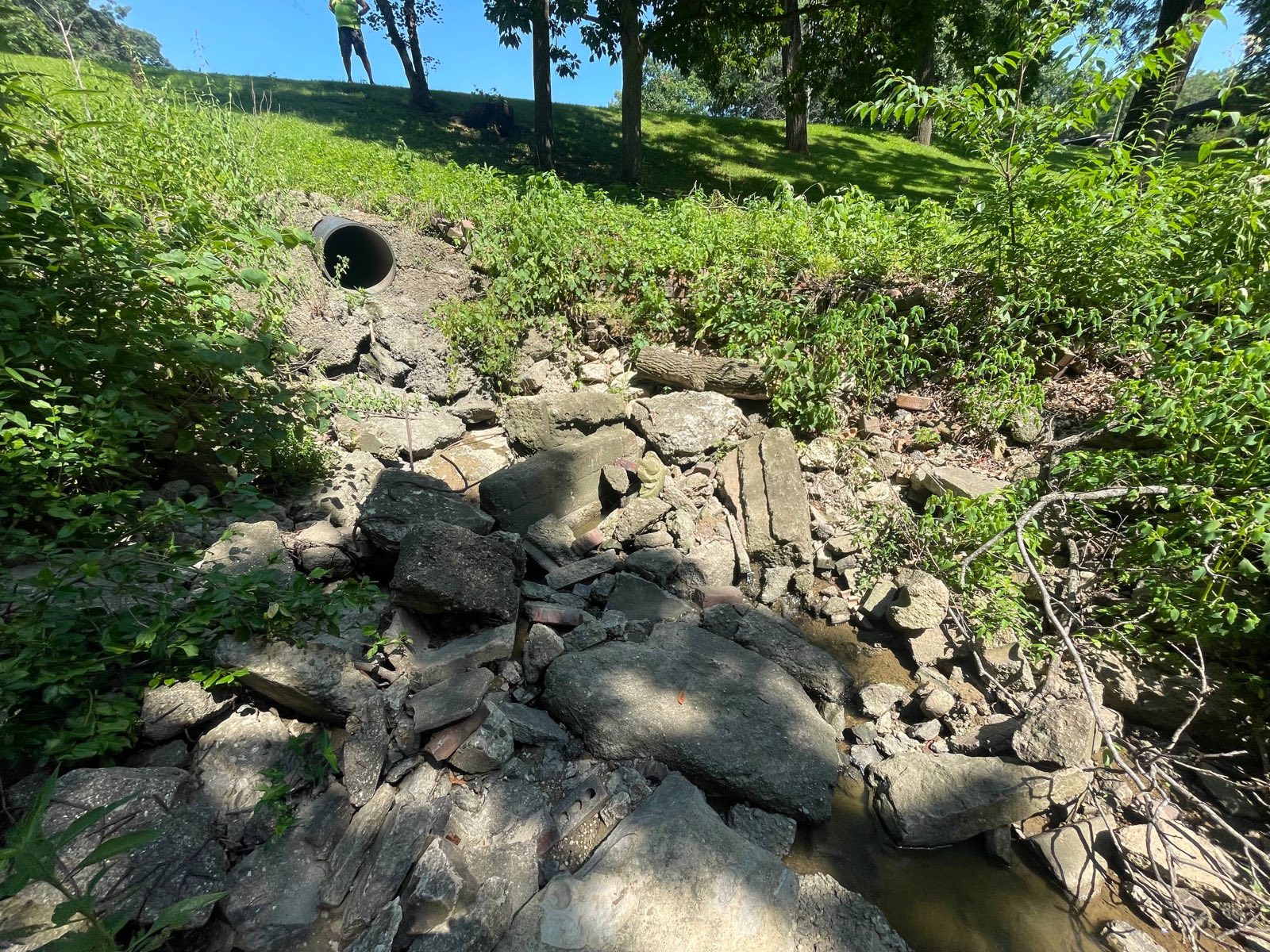
Steady loss with a dry, sound dam usually means the pond is losing through a sand or gravel lens in the bottom, not the embankment. That's a basin fix, not a dam fix — we work the drawn-down basin, blanket the leaking zone in compacted clay, and re-key it to the good material around it.
Timing matters as much as method: late summer into fall is when this work goes right, because the pond is at its low point and clay will actually compact. A dam repaired on saturated spring ground is a dam you'll be repairing again.
Want the long version before you call? Our guides walk through finding a leak and telling seepage from piping and why farm ponds leak in the first place. When you want it walked and fixed instead of diagnosed off a screen, that's this page — call (217) 809-0779 and the walk is free.
A pond doesn't hold water because something was laid in it. It holds water because the ground under it is tight — dense enough that water can't work its way through. That's the whole job, and it's earthwork, not a product.
A pond that won't hold is usually losing through a sand or gravel lens in the bottom, a spot the builder never worked, or ground that got loosened and never put back to density. We draw the pond down, dry the basin, and find the zone that's actually letting go. Then that zone gets scarified, moisture-conditioned and recompacted in lifts until it's tight, and keyed into the sound material around it so water can't just run along the seam. Banks get the same treatment up past the waterline, because a basin that seals at the bottom and leaks at the edge is still a leaking pond.
What's under your ground decides how the job runs. Most of Coles, Cumberland, Douglas and Moultrie county ground has heavy till clay close enough to the surface to seal well once it's worked and compacted right. Sandier draws along the Embarras and the Kaskaskia don't always have it. That's the first thing we test-pit on the walk, because it's the thing that decides whether the pond can be sealed at all.
Sealing the basin usually happens alongside the rest of the drawdown work — while the pond is down is the right time to re-key the dam, reset the outlet, and cut the spillway back to grade. One machine spread, one trip. Call (217) 809-0779 for a free on-site walk and we'll tell you whether it's the basin, the dam, or both.
Usually yes. If the dam is sound and the loss is through the basin, we draw the pond down, find the zone that's letting go, and work just that area — scarified, moisture-conditioned and recompacted to density so the ground itself seals. The pond keeps its shape and depth. A full rebuild only comes up when the dam is failing too, or the basin was never cut deep enough to be worth sealing.
A good share of the ponds we get called to are not leaking through the dam at all. They are leaking along a pipe, or through one. The principal spillway — the barrel through the dam and the riser standing in the water — is the one manufactured part in an otherwise earthen structure, and it is the part with a service life. Corrugated steel rusts out at the flow line. An old riser gets crushed by ice or perforated at the waterline. The joint between barrel sections opens up. And the outside of the barrel, where it passes through the fill, is a ready-made piping path if the original build had no anti-seep collars on it or the fill around it was never properly compacted.
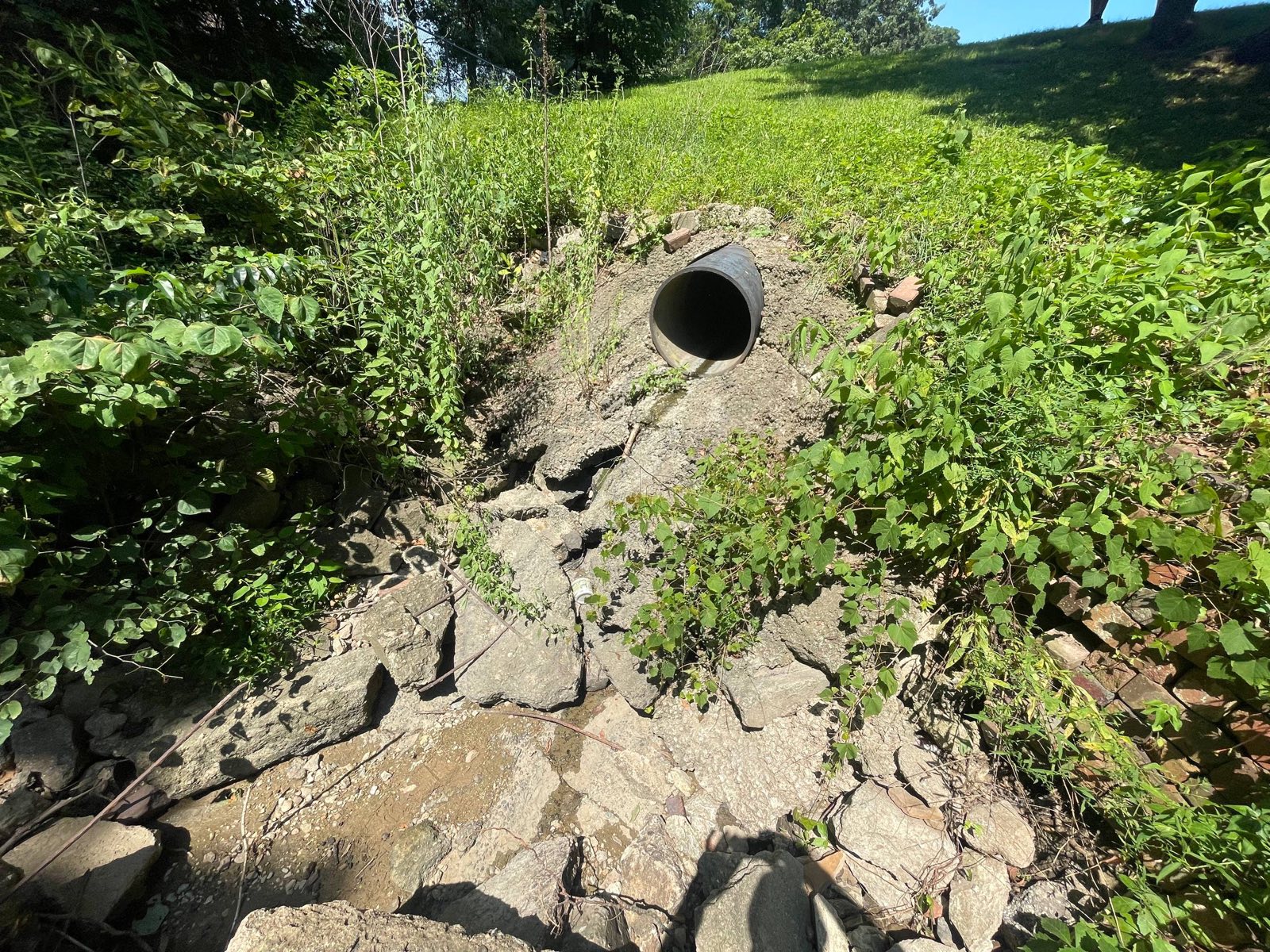
The tells are specific. Water running around the pipe instead of out of it. A wet spot or a slump on the downstream face directly over the barrel line. Cloudy discharge that carries fill with it. A sinkhole opening on the dam crest above the pipe. An apron that has undercut and dropped. Any of those is the pipe, not the clay, and no amount of work on the dam face fixes it.
Pond pipe replacement is a dig, not a patch. The pond gets drawn down, the fill comes off the old barrel, the pipe and riser come out, and the new one goes back on a prepared bed with anti-seep collars sized to it and the trench backfilled in thin compacted lifts the same way a core is built. Sleeving or relining an outlet barrel that is already deformed does not restore the thing that failed — the seal between pipe and fill — so on a farm pond we replace rather than reline. Trash rack, riser height and apron get set at the same time, because the machine and the drawdown are the expensive part and they are already bought.
If your pond is losing water and you can see it moving at the outlet, that is the good news — a failed outlet is a known, bounded repair, and it is a lot less work than rebuilding a dam that has been piping for five years because nobody chased the pipe. Call (217) 809-0779 and we will walk it.
Freeze-thaw is usually why you are reading this in spring. Water works into a crack on the dam face, freezes, wedges the crack wider, thaws and does it again — all winter, every winter. Muskrat galleries that were tight in the fall are open by April. Ice sheet against the shoreline shears the bank back. So the damage shows itself in March and the pond looks worse than it did in October, which is real and not your imagination.
The repair still waits, and for a reason worth understanding: clay will not compact wet. A core rebuilt into saturated spring ground is not a core, it is a pile, and it will seep the first full year. Between February and April the frost is also coming out of the ground from the top down, leaving thawed material sitting on frozen material, and that ground will not carry an excavator no matter what the calendar says. Late summer into fall — the pond low, the water table down, the clay workable — is when this work goes right. The exception is a dam that is actively piping, which we look at whenever it is found, because that one is a failure in progress.
Do you need a permit to repair a pond dam in Illinois? On a typical private farm pond, usually not — repairing an existing dam in place is maintenance. Four things can change that, and we check them before a machine moves: whether the dam is large enough or impounds enough water to fall under the Illinois Department of Natural Resources dam rules; whether the pond sits on or connects to a stream or wetland, which can bring the Corps of Engineers in; whether the work disturbs an acre or more of ground, which triggers the Illinois EPA construction stormwater permit; and what your county requires, which varies across our radius. If paperwork is needed, we tell you at the walk and before anything is scheduled.
Whether it's a leaking dam or a washed-out spillway, the honest steps don't change much.
We look at the pond, the dam face, the spillway, and the outlet, and figure out where the water is actually going — leak, seepage, pipe, spillway, or burrow. Honest read before any paper. Free estimate.
The pond gets drawn down or drained through the outlet or a siphon so the machine can reach the failed section and the ground is dry enough to compact clay against.
We dig out the leaking dam section, the failed spillway, or the bad pipe back to solid, clean ground — chasing a leak or a burrow to its source instead of skinning over the surface.
The dam gets re-keyed into a core trench and rebuilt in compacted clay lifts; a leaking basin gets scarified and recompacted to density; a spillway gets re-graded and armored — all to NRCS 378 embankment spec.
While the water's down we reset the outlet pipe and riser, size and armor the emergency spillway, and re-cut eroded banks to a clean, stable slope.
We return topsoil, set riprap where erosion is a risk, seed the disturbed ground, and let the pond fill back to grade — repaired to hold, not to limp along.
Plenty of people will push dirt at your leak. Here's what makes repairing a pond with Brohez Trucking different.
We repair ponds the same way we build them — native clay, keyed core, real compaction. Knowing how a good pond holds is what lets us find why yours doesn't. See pond builders.
Levi runs the machine and answers the phone. The man who diagnoses your leak is the man who fixes it — no handoff to a crew you never met.
A leak chased to its source and re-sealed in clay stays fixed. Dirt pushed over a wet spot is back next spring. We do the first one.
Mattoon-based, family-owned, working a 60-mile radius. We know Coles County soils, the moraine, and where the clay turns to outwash sand — and how our dams fail.
Full liability and equipment coverage. Certificate of insurance available on request, before any work starts.
An itemized quote you can read line by line — equipment hours, volume moved, clay and materials, pipe, riprap. No mystery line items, no high-pressure close.
Built to spec, not to shortcut. We rebuild earthen dams to NRCS 378 embankment spec — keyed core trench, compacted lifts, and a spillway sized to the watershed — because that's what keeps a repaired pond from failing again. The value is in the fix that lasts, not the corner cut.
Verified five-star Google reviews from customers across our excavation, demolition and hauling work in central Illinois. Read them all on our reviews page.
Real iron on real central-Illinois pond and dam work.
A pond that's dropping faster than evaporation and use explain is almost always losing water through the dam or the basin — not straight down. The usual culprits are a leak or seepage path through the earthen dam, a spot where the clay never sealed or was cut by a sandy seam, an old outlet or drain pipe that's rusted or pulled apart, or animal burrows — muskrats especially — tunneling through the embankment. We walk the pond, find where the water is actually going, and fix that rather than guessing. Call (217) 809-0779 for a free look.
Yes, almost always. Once we find where it's losing water, most leaks are fixed by drawing the pond down, opening up the failed spot in the dam or basin, and re-sealing it with compacted native clay — the same way a good pond is built in the first place. A seeping dam gets re-keyed into a clean core trench; a spot in the basin that won't hold gets scarified and recompacted to density; a failed pipe gets replaced. We repair clay-lined and embankment ponds, and re-sealing with clay is a proven, lasting fix.
We draw the pond down enough to work the dam dry, then dig out the leaking section back to solid ground and cut a clean core trench through it. The dam gets rebuilt in compacted clay lifts keyed into that trench — real compaction, not just pushed-up dirt — so the seepage path is sealed off for good. If the leak follows an old outlet pipe or an animal burrow, we chase it to the source and re-pack around it. Built back to NRCS 378 embankment spec so it holds.
Yes — re-sealing is the core of most pond leak repairs. Once we find where the water is getting out, we draw the pond down, open up the spot in the dam or basin where the clay failed, and re-seal it with compacted native clay, packed in lifts the same way a sound clay-lined pond is built in the first place. A seeping earthen embankment gets re-keyed into a clean core trench; a basin spot that never held gets scarified and recompacted to density. Re-sealing with native clay on clay-lined and embankment ponds is a proven, lasting fix — not a skin-over patch that lets go the next wet spring.
We draw the pond down to work dry, then rebuild whatever is failing. For the dam, we dig the leaking or slumping section back to solid ground, cut a clean core trench, and rebuild it in compacted native clay lifts keyed into that trench — real compaction, built to NRCS 378 earthen embankment spec. For the spillway, we re-grade and armor a gullied or undersized emergency spillway, reset or replace the principal outlet pipe and riser, and size it to the watershed feeding your pond so the big storm passes safely instead of taking the dam. We work on clay-lined and earthen embankment ponds only.
Yes. A washing, gullied, or undersized spillway is one of the most common — and most dangerous — pond problems, because a spillway that can't pass a big storm safely can take the whole dam with it. We rebuild and re-grade the emergency spillway, reset or replace the principal outlet pipe and riser, armor the flow line with riprap where it needs it, and re-seed so it holds. Sized to the watershed feeding your pond.
For most dam, spillway, leak, and pipe work, the pond needs to be drawn down or drained so the machine can reach the problem and the ground is dry enough to compact clay against. If there's an outlet or a way to siphon it down, that's the cleanest path — we'll help figure out how to lower it and let the area firm up before we dig. Some bank and erosion repairs can be done with the pond mostly full.
We repair clay-lined and earthen embankment ponds and dams — farm ponds, fishing and rec ponds, livestock and irrigation ponds, and small lakes across central Illinois. That's the same kind of pond we build: sealed with native clay and fed by the watershed that drains to it. If you have a lined or specialty water feature that's outside earthwork repair, we'll tell you straight at the walk.
We're a Mattoon-based pond and dam repair contractor serving a 60-mile radius across central Illinois — Charleston, Mattoon, Effingham, Decatur, Champaign, Urbana, Sullivan, Tuscola, Shelbyville, Pana, and Terre Haute, plus everywhere in between. Call to confirm if you're near the edge of the radius.
People searching for this land on a dozen different phrasings — pond dam repair, farm pond repair near me, a pond renovation contractor, a pond rebuild contractor, dam repair. It's one job under a lot of names, and it's the job this page is about. Straight answers to the ones we hear most, from a Mattoon outfit working a 60-mile radius.
If you're within about 60 miles of Mattoon, yes. Farm ponds are most of what we repair — leaking dams, seepage, blown-out spillways, muskrat damage, and outlets that water runs around instead of through. Levi walks it himself and tells you what's actually failing before anybody talks money. Call (217) 809-0779 — the walk is free.
Yes. A renovation is the middle ground between a cleanout and a new build: the basin gets re-cut to real depth, the dam gets keyed and rebuilt where it's weak, the spillway and outlet get put right, and the banks get re-sloped and seeded. It suits a pond that's in the right spot but was built shallow, built out of the wrong dirt, or has been neglected for twenty years.
Sometimes that's the honest answer. If the dam was never keyed in, the basin sits on sand, or the pond is in a spot the watershed can't fill, patching it just buys you a couple of seasons. As a pond rebuild contractor we'll drain it, take the failed work back to undisturbed ground, and build it the way it should have gone in — and we'll tell you at the walk if that's what it needs, or if a repair will do.
We do — leaking, slumping, and piping dams re-keyed in compacted native clay, from small farm-pond embankments up to the bigger dams on lake construction work. Because we're Mattoon-based, the excavator and dozer come on our own trailers with no out-of-town mobilization bill attached.
Seepage is water finding a path through the embankment instead of over it. On central Illinois dams it is almost always one of four things: a dam built without a core trench, so water travels under it through the old topsoil and root zone; a sand or gravel seam the original dig went through and never sealed; the pipe — water tracking along the outside of the outlet barrel, which is what anti-seep collars exist to stop; or animal burrows opened through the fill. A wet spot or a soft, spongy area on the downstream face that stays wet when the weather is dry is seepage, not rain.
You have to cut off the path, not patch the exit. We draw the pond down, open the dam through the seeping section, and cut a key trench the full depth down into tight material below the leak, then rebuild in compacted lifts of native clay. If the water was tracking the outlet pipe, the barrel gets anti-seep collars sized to the seepage path before the fill goes back. Filling the wet spot on the face from the outside without keying the trench hides it for a season and it comes back — that is the repair we get called to redo.
Losing water is a repair. Holding water but gone shallow and mucky is a cleanout. Wrong spot, wrong size, or a dam that was never built right is a case for new pond construction. Most people call us sure it's one and it turns out to be another — that's what the free walk is for.
Brohez Trucking LLC repairs leaking dams, failing spillways, and seeping ponds across a 60-mile radius from Mattoon, IL — into Coles, Cumberland, Douglas, Shelby, Moultrie, Effingham, Edgar, Clark, Champaign, and Macon counties, plus over the line into Vigo County, Indiana. Pick your town below for local details, or call (217) 809-0779 for a free estimate anywhere in the radius.
Losing water, a wet spot on the dam, a spillway washing out? Give us the basics and Levi calls you back the same day with a straight answer. Rather talk now? (217) 809-0779 or text us.
Walk it with us. We'll find where it's failing and tell you straight what it takes to fix it for good — new clay, keyed dam, sized spillway. We move the earth for you.
(217) 809-0779 📞 Call For Free Estimate Contact Us