🛡️Fully Insured·Full Liability + Equipment Coverage·Certificate Of Insurance Available On Request
Pond Cost — Mattoon & Central Illinois

Cost To Build A Pond In Central Illinois — What Sets The Price To Dig One

How much does it cost to build a pond? The honest answer is that it depends on your land — and here's exactly what moves the number. No sticker price, no guessing games, just a straight figure after we walk your spot. Free estimate.

📞 Call (217) 809-0779 Free Estimate
Owner on every job Fully insured Mattoon-based · serving central Illinois 18 five-star Google reviews Free on-site estimate

🍂 Late summer through fall is prime pond dig season in central Illinois — driest ground and the firmest access for the equipment. We're now booking. Get your free on-site walk scheduled now →

How Much Does It Cost To Build A Pond In Central Illinois?

People search "how much does it cost to build a pond in central Illinois" expecting one number — but the cost of pond construction isn't a product off a shelf. The price to dig a pond is set by your land, not a chart: it's a custom earthmoving job, and two ponds the same size on different ground can cost very differently, so any flat "per-acre" number you read online for building a pond cost is a guess at best and misleading at worst.

Here's the straight version: the cost to dig a pond comes down to how much dirt has to move, how big a dam the site needs, and how hard the spot is to work. A small half-acre farm pond in an open field is a quick job. A deep multi-acre fishing pond in a wooded draw with sandy soil is a different animal. We'd rather walk your land and give you a real number we'll stand behind than post a price that turns out wrong the moment we see your dirt.

Below is exactly what we look at to price a pond — so you know what's driving the number before we ever show up.

The Six Things That Move The Cost Of Pond Construction

Read these and you'll understand your own quote better than most contractors will explain it. For the same six drivers written out job by job, see what drives the cost of a pond in central Illinois.

Size & Depth

The biggest driver. More surface and more depth means more cubic yards of dirt to move and more dam to build. A rec pond dug deep to keep fish through winter moves a lot more dirt than a shallow stock pond.

Soil Type & Water Table

Good clay holds water and keys a dam tight — that's the ideal. Sandy stringers or a high water table mean test pits and extra compaction to get the basin tight — and sometimes the answer is that a pond doesn't belong on that spot. Soil can swing a price more than size does.

The Dam & Spillway

The load-bearing part of any pond. A taller, longer dam in compacted clay lifts with a properly sized spillway is real work and real cost — and the one place you never want a contractor to cut corners.

Site Access & Haul Distance

An open spot near the road is quick to work. A tight, wet, or far-back site adds equipment hours, and if spoil has to be hauled a long way instead of spread on site, that's more time and fuel.

Land Clearing

Brush, trees, and timber on the footprint have to come off before the dig. A clear field is cheap to start; a wooded draw means clearing, stumping, and hauling before the first bucket of pond dirt moves.

Permits & Finish Work

Most small farm ponds need no permit, but bigger jobs or over-an-acre disturbance can trigger filings. Then there's the finish — shaping, topsoil, riprap, and seeding so it looks done, not like a job site.

Every pond is a different mix of these six. That's why the only honest number is one we give you after we've seen your land. See how a pond build goes →

How Each Factor Moves The Number

If you want to understand your own pond quote, this is the honest breakdown of how much each of these swings the work — and why a number to dig a pond only means something once we've stood on your ground.

Size and depth set the volume of dirt

Everything starts with cubic yards. Surface acres times depth is roughly how much material has to come out of the basin and go into the dam or the spoil pile — and dirt moved is equipment hours, which is the single biggest lever on what a pond costs. A shallow stock pond and a deep recreation pond can cover the same surface acre and still be very different jobs, because the rec pond has to be dug to at least eight feet at the deepest point so fish don't winterkill and the water stays clean instead of weeding over. Deeper water means far more dirt to move, so depth often moves the number more than surface size does.

Soil and water table decide whether it holds

A pond is only as good as the clay under it. Good, tight clay both holds water and keys a dam in solid — that's the ideal central-Illinois pond site. Sandy stringers, gravel seams, or a spot where the ground won't seal mean test pits to read the soil, a deeper core trench, and more working and compaction to get the basin tight — and sometimes they mean the spot won't hold a pond at all. Because Brohez ponds are clay-lined and runoff-fed — sized to the watershed that drains to them, never dug down into the water table — the quality of the clay on your ground is one of the biggest cost swings there is. Soil can move a price more than size does.

The dam and spillway are the load-bearing cost

The dam is the part that has to hold for decades, so it's the one place a cost is earned, not cut. A taller, longer embankment is more clay to place and compact in proper lifts, keyed into a core trench so water can't track underneath. On top of that goes a properly sized spillway system — a principal outlet pipe plus an emergency spillway wide enough to pass the big storm safely. The bigger the watershed feeding the pond, the more spillway it needs. We build embankment dams to NRCS 378 spec because that's what keeps the pond from failing the first wet spring — and that spec work is real cost you can see in the finished pond, not a line to shave.

Access and haul distance set the equipment hours

An open field near a good road is quick to work — the machines get in, the spoil gets spread close by, and the hours stay down. A tight, wet, or far-back site is the opposite: more time to reach, softer ground to work, and if the spoil can't be spread on site it has to be hauled, which is more truck time and fuel. Where the dirt ends up matters as much as how much of it there is.

Clearing, permits, and finish work round it out

If the spot is wooded, the brush, trees, and stumps have to come off and be hauled or burned before the first bucket of pond dirt moves — a clear field skips all of that. Most small farm and residential ponds don't trigger a permit, but ground disturbance over an acre can require an IL EPA NPDES filing, and larger dams can cross IL DNR thresholds; we tell you what your job needs before any dirt moves. Then there's the finish — shaping the shoreline, returning topsoil, placing riprap where erosion is a risk, and seeding the slopes so the pond looks done, not like a job site.

The Best Time To Dig A Pond

The best time to dig a pond in central Illinois is late summer through fall. The ground is at its driest, the water table is low, and the equipment has firm access — which means cleaner work, better compaction on the dam, and fewer hours lost to mud. A pond dug in the right window simply takes less fighting than the same pond dug in a wet spring, and that shows up in the work. Summer is the time to get the walk done and get on the schedule so you're ready when the ground is at its best.

Freeze-thaw is the other half of that answer, and it costs money in a way people do not expect. From roughly February into April the frost comes out of the ground from the top down, leaving a thawing layer sitting on a still-frozen one with nowhere for the water to go — ground that carried a loaded truck in January will not carry a tracked machine in March. Every hour a machine spends fighting that is an hour on the bill that bought no pond. Freeze-thaw is also what re-opens cracks on a dam face and shears a shoreline back over a winter, which is why a job pushed into the wrong window can end up paying twice: once to build it and once to fix what the first winter found.

Add all of that up and you can see why there's no sticker price: your pond is its own mix of these factors. What we can promise is a straight, itemized number once we've read your land — and the walk to get it is free. See how a pond build goes →

Start With The Dirt — How Many Yards Have To Move

Asking what a pond costs is really asking how big the job is. Since equipment hours are the biggest lever, the honest way to picture your pond is in cubic yards of dirt and days on site — before anybody talks money. Here's roughly what each size means in work.

Surface size Typical depth at the deep end Rough dirt to move Machine time on site
¼ acre — small stock or backyard pond 8 ft ~1,400–1,600 cu yd a couple of days
½ acre — farm pond, fishable 10 ft ~3,500–4,000 cu yd most of a week
1 acre — recreation pond 12 ft ~8,500–9,500 cu yd two weeks or more
2 acres — large rec pond or small lake 14 ft ~20,000–22,000 cu yd a month or more

Read those as the shape of the job, not a quote. They assume a dish-shaped basin on workable clay with a normal dam and somewhere on site to put the spoil — the average depth of a pond runs well under its deepest point, which is why the volume climbs faster than the surface acres do. Doubling from one acre to two doesn't double the dirt; it roughly doubles it again on top of a deeper dig.

One thing to be straight about: the machine time above is moving dirt. Clearing a wooded spot, keying and compacting the dam in lifts, setting the spillway pipe and emergency spillway, then shaping, topsoiling and seeding all sit on top of it. On a wooded or wet site those can add as much time again as the dig itself.

Three things move these numbers hard on real ground. Depth — going deeper for fish adds volume across the whole basin, not just the middle. Where the spoil goes — spread on site is fast, hauled off is truck hours. The clay — if the soil is marginal, a deeper core trench and extra working and compaction to get it tight are added work that no size chart can predict. Our ponds are clay-lined and runoff-fed, sized to the watershed above them, so the ground itself decides a lot of this.

1/4 Acre Pond Cost

The smallest pond worth digging with real equipment — a backyard or livestock pond at roughly 1,700 to 2,200 cubic yards on a normal site. What surprises people about a quarter-acre pond cost is how little of it scales down with the size. The machine still has to get there, the topsoil still has to be stripped and stockpiled, the dam still needs a core trench keyed into solid ground, and the spillway still has to pass the same storm the watershed above it delivers. Mobilization, the dam and the spillway are close to fixed, so on a small pond they make up a much bigger share of the bill than they do on an acre. That's also why depth matters more here than anywhere else: at a quarter acre, a pond dug too shallow to hold fish through an Illinois summer costs nearly what a good one does.

Half-Acre Farm Pond Cost

The most common size we dig in central Illinois, and the one most people picture when they say "farm pond." Around 3,500 to 4,000 cubic yards on a normal site, most of a week of machine time, and a dam that's real work but not a major structure. On good Coles County clay in an open field this is about as clean as pond work gets — which is why a half-acre pond on the right ground can come in under a quarter-acre pond on the wrong ground.

1 Acre Pond Cost

An acre is where a pond starts feeling like a lake — 12 feet at the deep end, roughly 8,500 to 9,500 cubic yards, two weeks or more of dirt work before the finish. The dam gets taller and longer, which means more clay to key in and a spillway sized to a bigger watershed. Depth is the lever people underestimate here: going from 10 feet to 14 adds volume across the whole basin, not just the middle.

2-Acre Pond Or Small Lake Cost

Past about two acres you're in lake construction territory — 20,000-plus cubic yards, a month or more on site, and a dam big enough that sizing and compaction stop being details and start being the whole job. This is also where permits are most likely to come into it, since disturbing more than an acre of ground triggers an IL EPA filing.

Cost To Build A Pond Per Acre — Why That Unit Doesn't Work

Per-acre is the unit everybody asks for and the one that misleads worst, because surface acres are not what anybody digs. A pond is priced on cubic yards moved, machine hours, and where the dirt ends up — and those three don't track acres. Double the surface acres and the excavation roughly doubles, but the dam doesn't: a longer, taller embankment climbs faster than the basin does, and it's the most expensive dirt on the job because every lift of it has to be keyed, moisture-conditioned and compacted. Pull the other direction and the fixed costs dominate — mobilization, stripping, the spillway and the outlet all show up whether the pond is a quarter acre or two. That's before the ground gets a vote: the same acre on heavy till clay and on a sand lens are two different jobs at two different numbers. A per-acre figure quietly assumes an average depth, an average dam, an average haul and average dirt, and your site is not the average of anything. It's why we put volume and hours on paper after walking it instead of quoting a rate per acre.

What A Farm Pond Cost Calculator Can't Know

Type "farm pond cost calculator" and you'll get a box that asks for surface acres and average depth. Those two numbers are the only two it can know, and they are not the ones that decide the job. A calculator can't see how far the dozer has to push the spoil, or whether it can be spread on site at all. It can't see the gravel lens two feet down that turns a straightforward basin into test pits and a deeper core trench. It doesn't know how tall the dam has to be to hold the depth you want, how long it runs across the draw, or how big a storm the watershed above it delivers into the spillway. It has no idea whether a machine can reach the spot without a haul road, or whether there's timber to clear first. Every one of those moves the number more than the acreage does — which is why the output is a national average of sites that aren't yours. The honest version of a calculator is somebody standing on the ground with you: we walk it, read the soil and the drainage area, and put volume and hours on paper.

Why Illinois Ground Changes The Number

Nothing above holds if the dirt doesn't cooperate, and in central Illinois that varies inside a single county. The heavy till clay under most of Coles, Cumberland, Douglas and Moultrie counties seals a basin on its own and keys a dam tight — that's the cheap version. Sandier draws along the Embarras and the Kaskaskia, or a gravel lens two feet down, mean test pits, a core trench, and sometimes clay hauled in. That single soil difference moves a pond price further than going up a size class does, which is exactly why a national per-acre figure is useless on your ground.

Once we've walked your site we put real volume and real hours on paper, itemized, so you can see what you're paying for line by line. How a Brohez pond gets built → · Get a free on-site estimate →
What Drives The Cost To Clean Out A Farm Pond

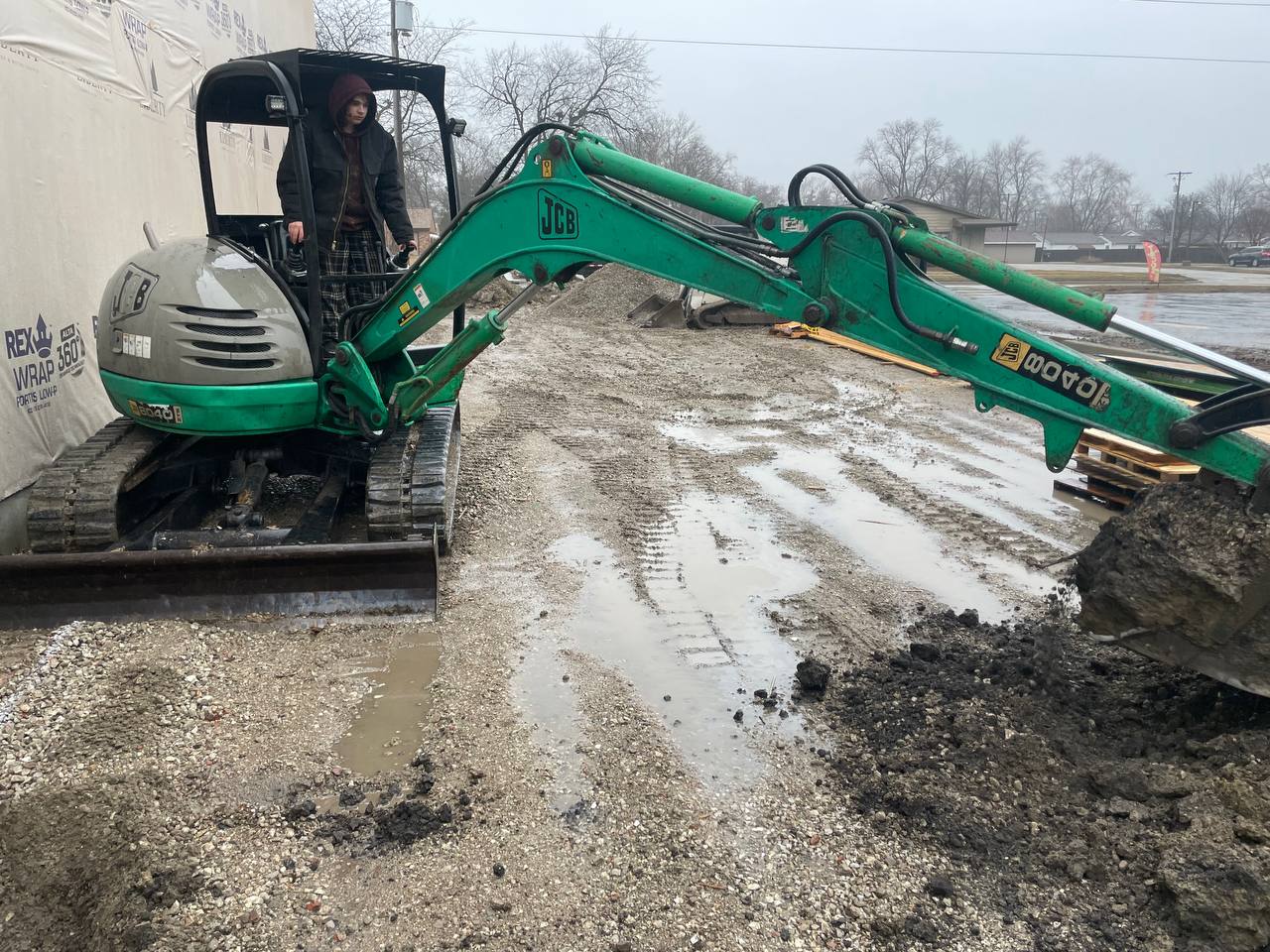
Everything above prices a pond that doesn't exist yet. A good share of the calls we get are the opposite job — the pond is already there, it's gone shallow and weedy, and the question is what it costs to get the depth back. Different work, different drivers, so here they are on their own.

The single biggest one is whether the basin can be worked dry. We clean ponds out dry: the water comes down, the bottom is given time to firm up, and an excavator reaches in and takes the silt off to a clean base. A pond with a working outlet that will draw down on its own is a straightforward job. A pond with no outlet, a spring feeding it, or a bottom that never firms up is a much longer one — and it's the difference between guessing at depth and actually getting it back.

What Moves The Number

None of those are things a website can price for you, and the ranges you'll find online are written for pontoon-mounted work in other parts of the country. We walk it, sound the muck, look at the outlet, and put real hours and real yards on paper. How the job itself runs is on pond cleanout.

A Real Number, Not A Range

Our quotes are itemized — equipment hours, volume moved, materials, dam work, permits — so you can read exactly what you're paying for. No mystery line items, no high-pressure close.

We walk your spot, read the soil and the watershed, figure the dirt and the dam, and hand you a straight figure for your actual pond. If the site's wrong for a pond, we'll tell you that too — an honest no costs you nothing. The man who quotes it is the man who digs it, so the number means something.

Planning a bigger water feature? See lake construction. Already have a pond that leaks or has silted in? The cost of pond repair or a cleanout runs by the same honest, itemized rules — and we can walk that with you too.

Verified five-star Google reviews from customers across our excavation, demolition and hauling work in central Illinois. Read them all on our reviews page.

★★★★★
“Would 100% use them again for rock or gravel needs. Levi was able to help with several gravel loads across different days and did a great job on the last day to help spread and level the last loads of gravel. He was also upfront about the price, no hidden or additional charges.”
— Adam Wahner · Rock driveway · Google Review
★★★★★
“We hired Brohez trucking to lay rock in our driveway. They did an excellent job and we were very pleased with their service. I would recommend this company to anyone looking to have this type of work done. Their prices are also really fair and reasonable.”
— Marko Verdin · Rock driveway · Google Review
★★★★★
“Great communication and prices were great for hauling rock and dirt.”
— JB · Rock & dirt hauling · Google Review

Pond Cost FAQs

How much does it cost to build a pond in central Illinois?

There's no honest flat number, because a pond is a custom earthmoving job, not a product off a shelf. The cost is set by size and depth, your soil and water table, how big a dam the site needs, how easy the spot is to reach with equipment, and how much clearing it takes. A small half-acre farm pond and a multi-acre fishing pond are completely different jobs. The only real number comes from walking your land — and that walk is free. Call (217) 809-0779.

How much does it cost to dig a pond per acre?

Per-acre numbers you see online are misleading because two one-acre ponds on different ground can cost very differently. Depth, clay quality, the dam, haul distance, and clearing swing the price far more than surface acreage alone. We price the actual dirt to move and the dam to build on your specific site, then hand you an itemized quote you can read line by line.

How much does it cost to dig a pond in central Illinois?

The cost to dig a pond comes down to the cubic yards of dirt that have to move, the size of the dam and spillway your watershed needs, your soil and clay quality, how easy the site is to reach with equipment, and how much clearing it takes. Our ponds are clay-lined and runoff-fed, so the clay on your ground matters as much as the surface size. We read all of that on a free walk and hand you a straight, itemized number for your actual pond.

Does a bigger pond cost more to build?

Usually, yes — more surface and more depth mean more cubic yards to move and a bigger dam to build, which is more equipment time. But size isn't the whole story: a smaller pond on bad soil, with a tall dam or a far-back wet site, can cost more than a larger pond on good clay near the road. That's why we price the real dirt and the real dam on your land instead of a flat per-acre figure.

How much does it cost to build a 1 acre pond?

A one-acre pond dug to about 12 feet at the deep end runs roughly 8,500 to 9,500 cubic yards of dirt and two weeks or more of machine time before the finish work — that's the honest way to picture the job. What it costs on top of that depends on your clay, how tall and long the dam has to be, whether the spoil can be spread on site or has to be hauled, and how much clearing the footprint takes. Two one-acre ponds a mile apart can price very differently for exactly those reasons, which is why we walk it before we put a number on it.

How much does it cost to build a farm pond in Illinois?

Most central Illinois farm ponds land between a quarter acre and an acre, and on the heavy clay under Coles, Cumberland, Douglas and Moultrie counties they're about as straightforward as pond work gets — the ground seals itself and the dam keys in tight. The costs that surprise people are the ones the map doesn't show: a sandy seam that needs a core trench, a wooded footprint that has to be cleared and stumped first, or a back site the equipment has to walk to. We read all of that on a free on-site walk and hand you an itemized number.

Why won't you put a price on your website?

Because a number on a website would be a guess, and a wrong guess helps nobody. If we posted a typical price and your job came in higher because of bad soil or a big dam, you'd feel misled. We'd rather walk your land, give you a straight, honest figure for your actual pond, and keep our word on it. The estimate is free with no pressure.

What makes one pond cost more than another?

Size and depth set how much dirt moves. Soil decides whether the basin will seal at all, and how much working and compaction it takes to get there. The dam — how tall and long it has to be — is the load-bearing cost. Site access and haul distance set the equipment hours. And land clearing adds up if the spot is wooded. We read all of that at the walk before quoting.

When is the best time of year to dig a pond in central Illinois?

Late summer and fall are prime — the ground is at its driest, the water table is low, and the equipment has firm access, which means cleaner work and better compaction on the dam. Summer is the time to plan it out and get on the schedule. We're now booking fall dig-season slots, so get your free on-site walk done now and you're ready to dig when the ground's at its best. Call (217) 809-0779.

What does it cost to clean out a farm pond?

It turns on four things, and none of them are surface acres. How deep the silt actually is — owners nearly always underestimate it, because you can't see it. Whether the pond will draw down and the bottom will firm up so it can be dug dry. Where the muck goes once it's out, since it comes out wet and heavy and won't stack like clay. And whether a machine can reach the water's edge. A pond with a working outlet, firm ground around it, and a field to spread on is a straightforward job; take any one of those away and it's a much longer one. We walk it, sound the muck, look at the outlet, and put real yards and real hours on paper. More on the job itself: pond cleanout.

Is it cheaper to clean out an old pond or dig a new one?

Usually the cleanout — but not always, and the deciding factor is the dam, not the basin. If the embankment and the outlet are sound and the pond has simply silted in, cleaning it out moves far less dirt than building a new pond and dam from scratch. If the dam is leaking, the outlet pipe is failing, or the pond was in the wrong spot to begin with, you can spend cleanout money and still own the original problem. That's a judgement call we'd rather make standing on the dam than over the phone, and the walk is free.

Should I fix the dam and the outlet while the pond is drained?

Yes — an empty pond is the only cheap chance you'll ever get at them. Drawing a pond down, waiting for the bottom to firm, and getting equipment to the water's edge is most of the setup cost on both jobs, so the outlet pipe, the spillway, and a seeping dam cost a fraction to handle while the machine is already there and the basin is dry. Coming back for them in two years means paying that setup a second time — and it means a full pond you have to drain all over again. See pond repair.

Is the estimate really free?

Yes. We come out, walk the spot, talk through what's reasonable for your land, and give you an honest go/no-go and a real number — at no charge and no obligation. You only pay if you decide to build. Call (217) 809-0779 to set up a walk.

What A Pond Costs Near You

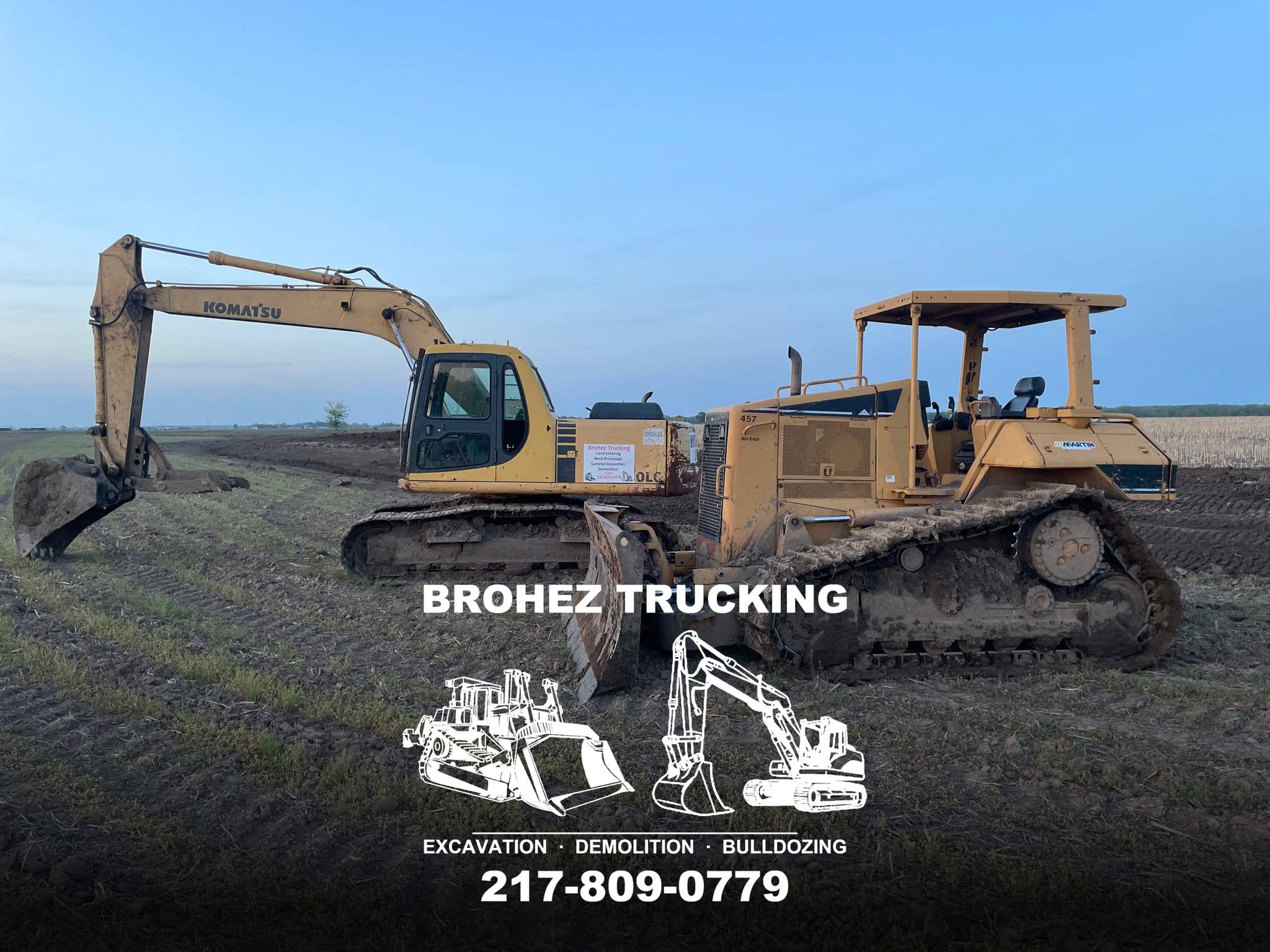
Where your pond sits changes what it costs, which is why a national average is worth nothing on your ground. Two things move with geography: your soil and our travel. The heavy clay under most of Coles, Cumberland, and Douglas counties seals a basin on its own; sandier draws along the Embarras and the Kaskaskia can need clay hauled in, and that haul is a real line item. Distance from Mattoon sets the move-in on the excavator and dozer — a job in Charleston and a job in Rantoul don't carry the same mobilization.

So when you search "pond builders near me" and start comparing, ask where the outfit is based. We're 60 miles or less from every town below, we haul our own iron on our own trailers, and the walk that produces your number is free anywhere in that radius.

How much does it cost to build a pond near me?

The honest answer is that we have to see the ground — but "near me" is a real part of it. Your soil decides whether the basin seals with what's already there or needs clay brought in, and your distance from Mattoon sets the equipment move-in. Both get read on the free walk and both show up as their own line on the quote. Call (217) 809-0779.

Do pond builders near me charge for the estimate?

We don't. Anywhere inside the 60-mile radius from Mattoon, the on-site walk is free with no obligation — we look at the spot, tell you straight whether it'll hold water, and hand you an itemized number. You only pay if you decide to build.

What is the cost of pond construction in central Illinois?

The cost of pond construction is set by how much dirt has to move and how hard it is to move it, not by the pond's size on paper. Six things drive it: the volume of excavation, whether the dam is built from material won on site or hauled in, how far the machines travel to get there, what the soil turns out to be when we test-pit it, the spillway and outlet the site requires, and the season you build in. Two one-acre ponds on different ground are genuinely different jobs. We walk the site, test what is under it, and give you an itemized number for your ground rather than a chart figure.

How is pond construction cost calculated?

We price the job, not the acre. The dirt volume comes off the shape the pond has to be to hold water on your site, which sets the equipment hours; the dam sets how much of that material can be reused instead of hauled; access and haul distance set what the trucks cost; and the outlet, spillway and any clay blanket the soil calls for are their own lines. The quote comes back itemized — equipment hours, volume moved, materials, dam work, permits — so you can see what each part of the job is buying.

What drives pond excavation cost?

Cubic yards and the ground they sit in. Dirt volume is the single biggest lever, because equipment hours track it almost directly. After that it is what the excavator finds: clean workable clay is a straightforward dig, while rock, running sand, or a high seasonal water table all slow the machine and can change the design. Where the spoil ends up matters too — material that can be shaped and left on site costs less to handle than material that has to be trucked off.

What is the price to dig a pond, and why won't you quote one over the phone?

Because the honest answer needs a look at the ground. The price to dig a pond turns on soil, volume, access, dam height and outlet design, and none of those can be read over a phone — a site that looks identical to another from the road can hide a sand seam that changes the whole build. We come out, walk it, test-pit the basin, and put a real itemized number in writing. The visit is free and there is no pressure attached to it.

Does it cost more to build a pond farther from Mattoon?

A little, and we'd rather say so than bury it. Move-in and move-out of the excavator and dozer is a real cost, so a pond in Paris or Rantoul carries more of it than one in Charleston. It's a line on the quote, not a markup hidden in the dirt price — and it doesn't change once we've walked the spot.

Free Pond Estimates Across Central Illinois

Brohez Trucking LLC prices and builds ponds across a 60-mile radius from Mattoon, IL — into Coles, Cumberland, Douglas, Shelby, Moultrie, Effingham, Edgar, Clark, Champaign, and Macon counties, plus over the line into Vigo County, Indiana. Pick your town below for local details, or call (217) 809-0779 for a free estimate anywhere in the radius.

Tell Us About Your Pond

Give us the basics and Levi calls you back the same day with a straight number. Rather talk now? (217) 809-0779 or text us.

We'll call you back same day.

Get A Real Number For Your Pond

Skip the online guesswork. Walk your land with us and get a straight, itemized figure — free, no obligation. We move the earth for you.

(217) 809-0779 📞 Call For Free Estimate Contact Us