🛡️Fully Insured·Full Liability + Equipment Coverage·Certificate Of Insurance Available On Request
Pond & Lake Dam Construction — Central Illinois

Pond Dam Construction — The Part That Holds The Water

Earthen dams built across a draw: stripped footprint, keyed core trench, select clay in compacted lifts, dressed faces, and both outlets set to elevation before the first rain finds them.

(217) 809-0779 📞 Free Estimate

Dam Builders In Central Illinois

Go looking for someone to build a pond dam and you turn up engineering firms, marine contractors and a great deal about hydroelectric projects. What most people in central Illinois actually need is an earthen embankment across a draw, built by an excavation outfit that will still be twenty minutes away in five years. That is us — Brohez Trucking LLC, out of Mattoon, working a 60-mile radius.

A dam is the only part of a pond that can fail all at once. It is also the part that gets decided on the day it is built rather than years later, which is why this page is mostly about method. If the dam is already there and it is the problem, that is a different job with a different method — start at pond and dam repair instead.

New water, start to finish, lives on our pond construction page. This one is the embankment.

A Dam Holds Because It Reached Density

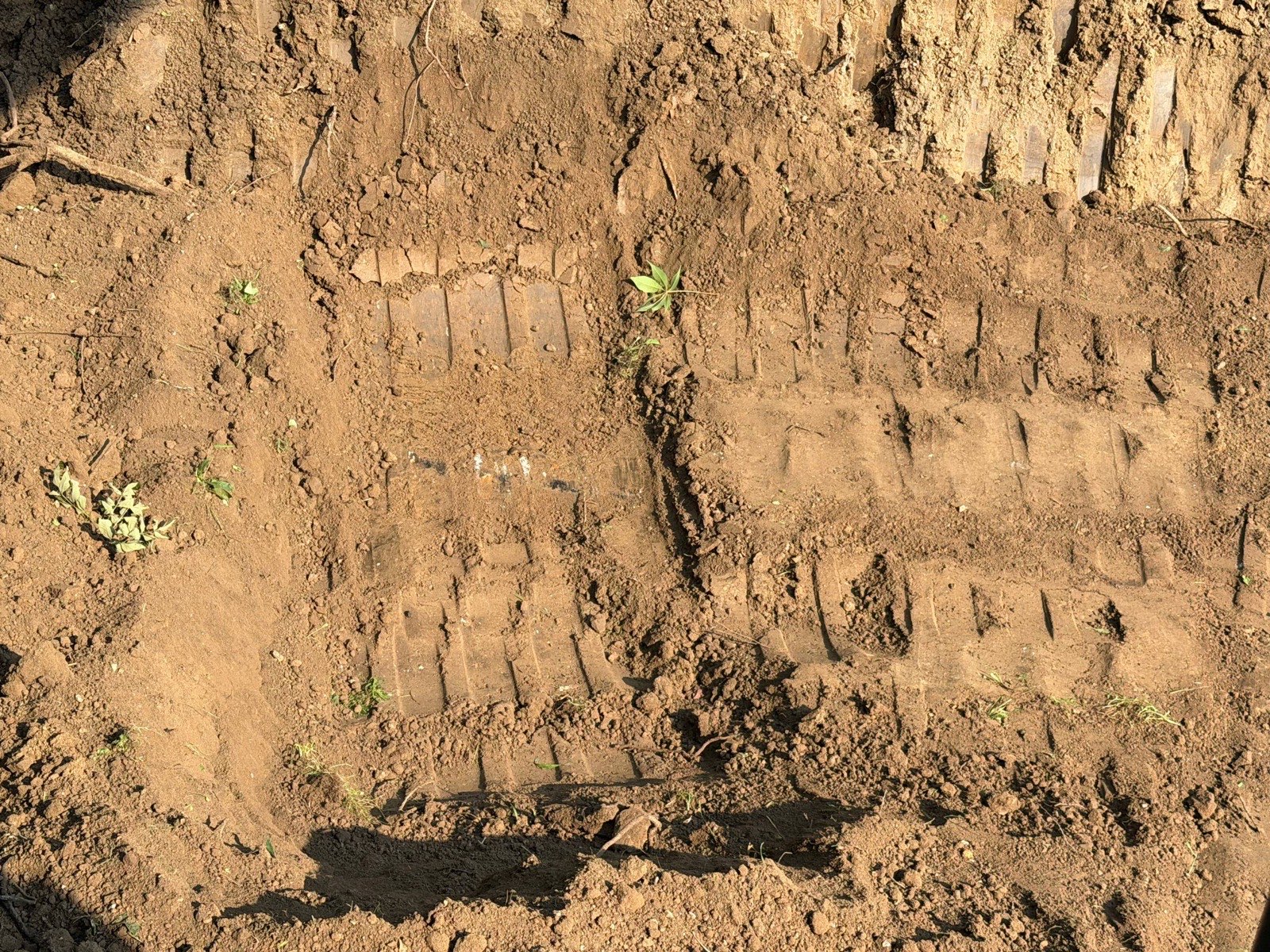
This is the whole thing, and it is worth being blunt about because it is where most failed dams were lost. An embankment holds because the material reached density — because it went in at the right moisture, in lifts thin enough to compact all the way through, with enough passes over each one. Nothing is laid into a dam to make it hold. There is no product that substitutes for the compaction, and a dam that did not reach density cannot be fixed later from the outside.

Moisture is the part people underestimate. Clay that is too dry will not knit no matter how many passes it gets; clay that is too wet pumps under the roller and never gains strength. There is a fairly narrow band where it works, and hitting it sometimes means watering the lift or waiting a day. That is not padding the schedule — it is the difference between a dam that is still dry-footed in twenty years and one that seeps from its first full pool.

Skip it and you will not know for a while. A dam built loose looks exactly like a dam built right on the day the machines leave. You find out two springs on, when the back face is wet and there is no way to test what is inside it without opening it up.

The Keyway & Core Trench

The pond keyway — the core trench — is the cutoff that ties the new embankment into undisturbed ground beneath it. It runs the length of the dam under the centerline, and it exists because water does not only travel through a dam. It travels under one, along the seam between the fill you placed and the topsoil, root channels and old plow pan you placed it on.

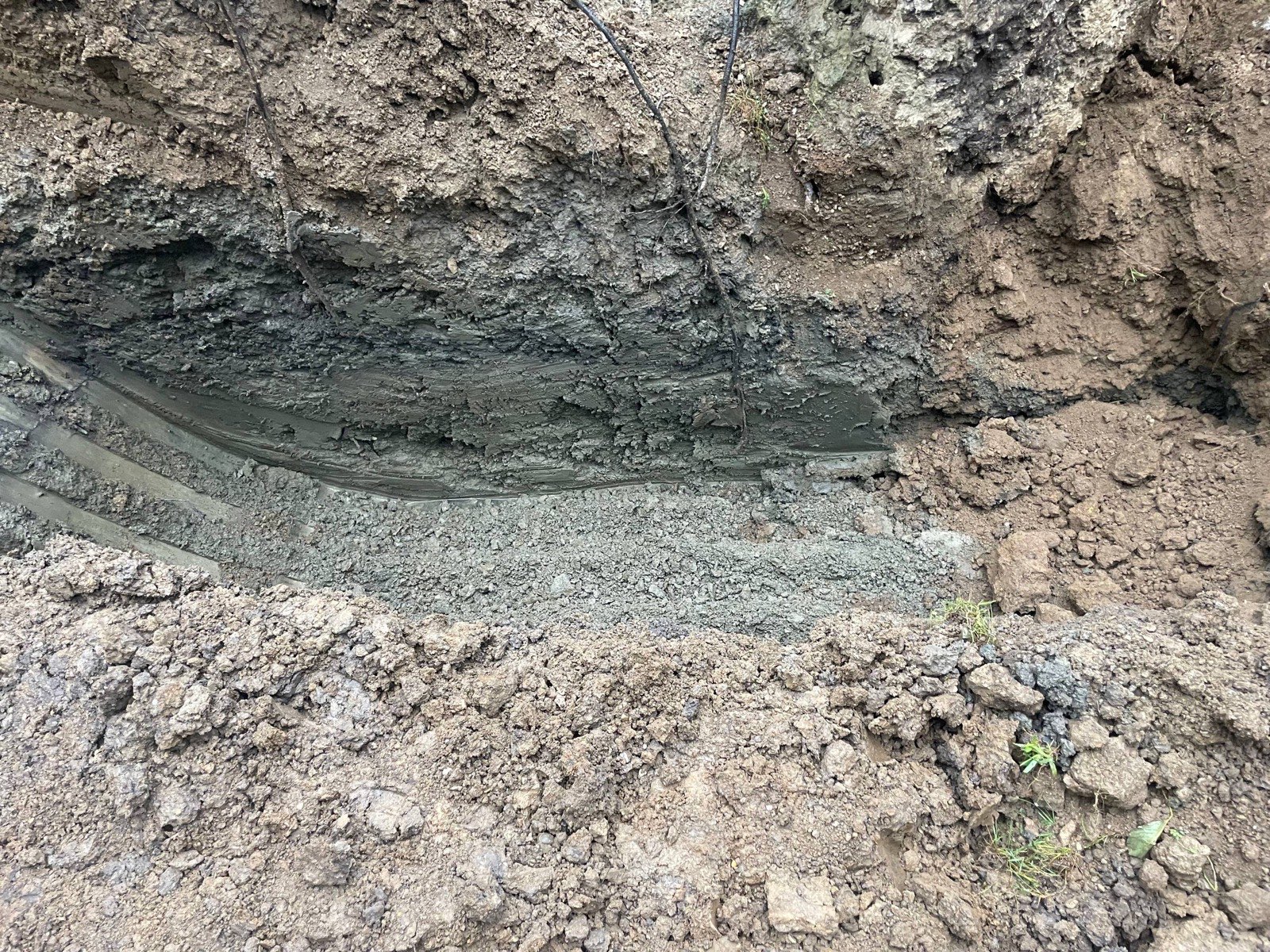
So the footprint gets stripped to firm native material first, and then a trench is cut down the centerline into tight, undisturbed soil and backfilled with the same select clay, in the same compacted lifts as the dam above it. How deep depends entirely on what the ground shows: the trench goes until it is keyed into material that will actually hold, which is a call made in the hole with the bucket, not one you can make from a map.

Two things we look for while it is open. A sand or gravel seam crossing the footprint is a direct path under the dam and has to be cut through and sealed, not bridged. And soft, wet ground under the centerline usually means the trench is not deep enough yet. Both are cheap to deal with while the trench is open and expensive to deal with in any other way.

The rest of the build sequence is on how a pond dam and spillway are built, which walks it start to finish with pictures.

Pond Dams, Lake Dams & The Outlets Through Them

New Pond Dam Construction

Embankment dams for farm, fishing and recreation ponds — stripped footprint, keyed core trench, compacted clay lifts, faces dressed to a slope that will hold and mow.

Lake Dams & Big Embankments

The same method with more of everything: a wider core, a longer crest, and a spillway sized to a much larger watershed.

Spillways & Outlet Structures

The principal outlet through the dam and the emergency spillway cut beside it, both sized to the watershed feeding the pond rather than eyeballed.

Anti-Seep Collars

Any pipe through an embankment is a seepage path along its own barrel. Collars go on the barrel we actually price, sized to the pipe, welded steel.

Dam Height & The Permit Question

Illinois Part 3702 sets the dam-safety trigger on height and storage together, not either one alone. If your dam trips it we say so before you spend money — engineering is not our scope.

Repairing A Dam You Already Own

Leaking, seeping, slumping, or a washed-out spillway on an existing embankment is a different job. That is pond dam repair.

The Emergency Spillway Is Not Optional

A dam wants two ways to pass water. The principal outlet — usually a pipe through the embankment with a riser on the pond side — handles the ordinary flow and sets the normal pool. The emergency spillway is a wide, shallow, grassed channel cut into undisturbed ground beside the dam, set above the normal pool, and it does nothing at all until the day it matters.

A dam with no emergency spillway is not a cheaper dam. It is the one that cuts a spillway for itself in the first storm that outruns the pipe, and it does that at the lowest point of the crest, which is the middle. Both outlets get sized against the watershed actually feeding the pond, and the spillway crest gets set to an elevation and shot in — not judged by eye off the top of the fill.

The other thing worth knowing: the emergency spillway belongs in undisturbed ground where the geometry allows it, not cut through the fill you just placed. Water running over new embankment material finds the loosest thing it can.

Building The Dam

1 · Walk The Draw

Free on-site visit. Where the water comes from, where the dam wants to sit, what the soil looks like, and whether the site works at all — including when the answer is no.

2 · Watershed & Layout

The acres draining to the site size the outlets and the spillway. Crest, pool elevation and spillway elevation get set before dirt moves.

3 · Strip The Footprint

Topsoil, sod and root mat off the dam footprint down to firm native ground, stockpiled for the faces later.

4 · Cut The Core Trench

Keyway down the centerline into undisturbed material, backfilled with select clay in compacted lifts.

5 · Build In Lifts

Select material placed thin, moisture-conditioned, and compacted lift by lift up to crest elevation. This is the slow part, and it is the part that matters.

6 · Outlets, Faces & Seed

Principal outlet and anti-seep collars set as the fill comes up, emergency spillway cut to elevation, faces dressed, topsoil back, seeded and mulched.

Owner On The Job, Not A Call Center

Brohez Trucking LLC is a central-Illinois excavation outfit based on U.S. Highway 45 in Mattoon. Levi walks your site, prices it, and runs the machine. The iron is ours and it is maintained — a Komatsu PC150LC-6 excavator, a Cat D6N dozer, a JCB mini for tight ground, and our own tandems. Fully insured; certificate available on request.

We build dams across Coles, Cumberland, Effingham, Douglas, Edgar, Clark, Shelby, Moultrie, Macon and Champaign counties, plus over the line into Vigo County, Indiana. One free on-site walk and one straight, itemized number.

Pond Dam Construction FAQs

What makes a pond dam hold water?

Density. The embankment holds because the material was placed at the right moisture in thin lifts and compacted all the way through, and because a core trench keys it into undisturbed ground so water cannot travel underneath it. Nothing is laid into a dam to make it hold — compaction is the mechanism, and it either happened on the day or it did not.

What is a keyway or core trench on a dam?

It is a trench cut down the centerline of the dam footprint into tight, undisturbed material, then backfilled with select clay in the same compacted lifts as the dam above it. It exists because water travels under a dam along the seam between new fill and the topsoil, root channels and plow pan it was placed on. Depth is decided in the hole, based on what the soil actually shows, not from a map.

Does my pond dam need a permit in Illinois?

Illinois dam-safety rules under Part 3702 set the trigger on dam height and impounded storage together, so a dam has to meet both parts of the test before it is regulated — most farm and recreation pond dams around here do not. Local rules can still apply, and a few counties treat a pond over a certain size as a special use. We tell you what we see at the walk and say plainly when something needs an engineer, because engineering is not our scope.

Do I need an emergency spillway?

Yes. The principal outlet handles ordinary flow; the emergency spillway is the wide grassed channel that carries the storm the pipe cannot. Without one, the water cuts its own spillway over the crest, in the middle, in the first big storm. It belongs in undisturbed ground beside the dam rather than through new fill.

Can you build a dam on any site?

No, and we would rather say so at the walk than take the job. The site needs a watershed that will actually fill and hold a pond, soil that will compact, and somewhere the embankment can sit without pushing water at somebody else's ground. If a site does not work we will tell you why, and the visit is still free.

How long does a pond dam take to build?

It depends on the size of the embankment, the haul, and the weather — the lifts have to go in at workable moisture, so a wet stretch stops the dam whether or not the machines are sitting there. We give you a realistic window at the walk rather than a best case.
Got A Draw That Should Be Holding Water?

Free on-site walk, straight answer about whether the site works, and one itemized number. Call or text a photo.

(217) 809-0779 📞 Free Estimate