Searching farm drainage tile contractors turns up two different businesses. A tiling outfit runs a tile plow and installs full-field pattern systems on spacing — that's a big-acre, plan-and-map job. An excavating contractor fixes what's already in the ground: broken and crushed lines, collapsed clay tile, blown outlets, lost grade, plus targeted single lines trenched to a good outlet. Brohez Trucking is the second one. We don't own a tile plow and won't pretend to — if your field needs systematically tiled we'll name the trade and hand you off. Coles County and 60 miles around Mattoon. (217) 809-0779.
If you've been calling around for farm drainage tile contractors and getting nowhere, there's usually a reason, and it isn't that nobody wants the work. It's that the search term covers two trades with two different machines, and half the people you're calling do the other one.
Here's the split, so you can aim the next call.
Two Trades, One Search Term
Pattern tiling is systematically draining a whole field — laterals on a designed spacing, mains sized to carry them, an outlet built to take the water. It's done with a tile plow, a machine that pulls pipe in behind a shank on a designed grade, and it comes with a plan, a map, and usually a survey. It's a specialty. The outfits that do it do a lot of it and little else.
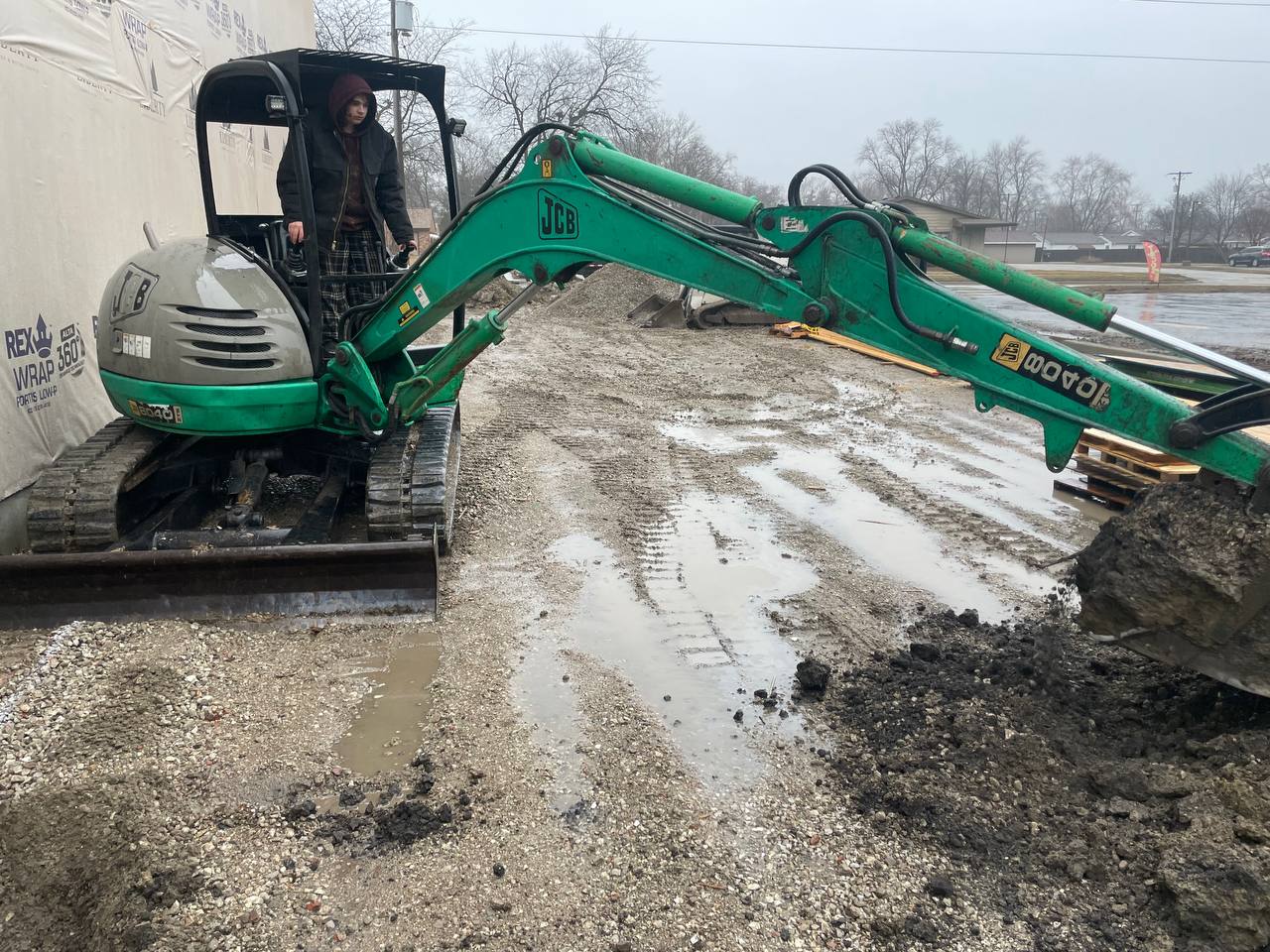
Tile repair and targeted drainage is fixing and adding to what's already there. Broken and crushed pipe, collapsed clay tile, plugged runs, blown-out outlets, risers, a line that's lost its fall — plus running one new line to a wet spot where a whole system isn't the answer. It's excavator work. It's diagnostic before it's mechanical, and it's a different day than pulling ten thousand feet of pipe.
Both are legitimately "drainage tile contractors." But asking a repair outfit to pattern-tile a quarter section, or asking a tiling crew to come find one break in a fence row, wastes everybody's afternoon.
Which One Does Your Field Need?
The test is whether the field used to drain.
- A spot that drained fine for years and now ponds → something broke. That's repair. A field doesn't lose its drainage character on its own; a line failed, an outlet washed out, or something crushed the pipe.
- A field that has never drained well anywhere → it may never have been tiled, or never tiled enough. That's a pattern-tile conversation with a plow outfit.
- One persistent wet hole in an otherwise good field → often a targeted line to a good outlet, not a system. Cheaper, faster, and it solves the actual complaint.
- An outlet that's caved, silted, or been mowed off → that's the cheapest fix on this page and it masquerades as a dead system all the time.
If you're not sure which you've got, how to find a broken or blown field tile walks the surface clues that tell them apart.
One more sorting question worth asking yourself before you dial: how much of the field is the problem? If you can walk the wet ground in five minutes and it's one shape — a streak, a pocket, the low end of a waterway — that's almost always a repair-and-targeted-line job. If the wet ground is scattered across the whole quarter and it's been that way as long as anybody remembers, you're looking at a design question, and a design question belongs with the outfits that own a plow.
What A Farm Drainage Tile Contractor Actually Does
Strip the search term down and the day-to-day work on a central Illinois farm falls into six buckets. Most farms that call have one or two of them; a few have all six.
Finding failures
This is the part people underestimate. Before anything gets dug, somebody has to figure out where the line quit — and the honest version of that is diagnostic work, not machine work. It means reading the surface: a wet streak that runs straight instead of pooling round, a stripe of ranker growth tracing the run, a slumped spot or blowhole where soil has washed down into a void, an outlet that used to run after a rain and now doesn't. It means walking the line from a known anchor and noting everything it crosses. A contractor who skips this and starts trenching is charging you to guess.
Repairing and replacing runs
Once the failure is located, the fix is usually small and specific: open the ground at the break, cut out the crushed or collapsed section, splice or replace that run in new pipe set back at grade, and tie it into the main so the whole line flows again. On old clay tile that has failed in one spot, it's common to replace a longer stretch than the visible break — clay that has collapsed once is usually tired on both sides of it, and coming back in two years to open the same field is worse for everybody.
Outlets and risers
The outlet is the cheapest fix on this list and it masquerades as a dead system constantly. Banks cave and bury the pipe end. Mowers and brush hogs take the end off. Rodents and roots plug it. Old metal ends rust out and collapse. Rebuilding an outlet — new end, proper apron or rodent guard, bank cut back so it stays open — will bring a whole system back to life often enough that it's always the first thing to check. Risers and surface inlets in the field get the same treatment: they get hit, they get buried, they silt shut.
Targeted lines
Not every wet spot needs a system. A single line trenched from a persistent wet pocket to a good outlet, sized right and set at a grade that actually falls, solves the specific complaint for a fraction of the disruption. This is excavator work, and it's the right answer more often than people expect — particularly for a wet hole in an otherwise good field, a seep along a fence row, or the back corner that has never drained because nothing was ever run to it.
The surface side
Tile pulls water down through the soil. It does nothing for water sitting on top of ground too tight to soak it in fast enough, and that's a big share of what gets blamed on tile in this part of Illinois. Grassed waterways, ditch and outlet cleanout, surface inlets, filling and shaping a low spot so it drains toward something instead of holding — that's earthmoving, and on a lot of fields it's half the actual fix.
Restoration
The job isn't done when the pipe is in. Backfill compacted in lifts so the trench doesn't settle into a ditch after the first wet spring, topsoil back on top in the right order, and the ground left so a planter can cross it. Restoration is real work, it takes real hours, and it belongs in the number you were quoted rather than showing up as a surprise afterward.
What The Work Looks Like, Start To Finish
Here's the actual sequence on a typical repair job, so you know what you're buying and roughly how a day goes.
1. The walk
Somebody comes out and walks the wet ground with you. This is where the field gets read: where the water sits, how long it stays, which direction the ground falls, where the outlet is and whether it's still any good, what the field did last year versus this year. Bring what you've got — an old tile map, a photo of the spot after a rain, the year you remember it changing. Any of that shortens the search. This walk should be free, and ours is.
2. Narrowing the break
Before a machine gets unloaded, the failure gets narrowed to a section. The outlet gets checked first. Then the line gets walked from the outlet uphill, because water backs up behind a blockage — which means the trouble is usually downstream of the puddle, not underneath it. Fence rows, field entrances, waterway crossings and low draws get flagged, because breaks cluster where something crosses or changes.
3. Locates
JULIE 811 gets called before dirt moves, and that's not a formality on farm ground — gas transmission, rural water, fiber and buried electric all cross fields around here, and a lot of it isn't where anybody's memory says it is. The locate ticket has a clock on it, so this is one reason a job doesn't start the afternoon you call.
4. The dig
The excavator opens the ground at the most likely failure. On a repair that's a short, deliberate hole — down to the line, spoil kept to one side so it goes back in the right order, walls kept safe. With the pipe exposed the problem is usually obvious in about ten seconds: crushed section, collapsed clay, a pulled joint, a length packed solid with silt or roots.
5. Pipe and grade
The bad run comes out and new pipe goes in, set to a grade that falls the whole way to the outlet. Grade is the part that matters most and shows the least — a line that dips holds water and silts in, and it will fail again in the same spot. Field tile normally sits three to four feet down, deeper than yard drainage, which is why this is real excavation and not a trenching-machine afternoon.
6. The outlet end
If the outlet is part of the problem it gets rebuilt while everything is open: pipe end reset, bank cut back and shaped so it stays open, guard on the end. It's cheap while the machine is already there and expensive as a second trip.
7. Backfill and cleanup
Trench backfilled and compacted in lifts, topsoil back on top, the ground graded so it sheds instead of holding, and the field left crossable. On a repair the aim is the smallest scar that fixes the problem — trenching up a whole field is a last resort, not a starting point.
8. The next rain
The real test is the first good rain after. A repaired line should be running at the outlet and the spot that used to hold should be draining down with the rest of the field. If it isn't, there's more line to find, and a contractor worth calling back will come look at it.
What Central Illinois Ground Does To Tile
Farm tile around Coles, Douglas, Moultrie and Shelby counties fails in a handful of predictable ways, and knowing them shortens the diagnosis.
- Century-old clay tile. A lot of ground in this part of the state was first tiled a very long time ago in short clay sections laid end to end. That tile did its job for generations, but it collapses with age, and it goes at the joints first. One collapse usually means neighbors.
- Heavy ground. Tight clay and silt loam drain slowly, which is the whole reason the tile is there — and it's also why a failed line shows up so fast as standing water. Ground that can't move water sideways has nowhere to put it once the pipe quits.
- Equipment weight. Machinery has gotten heavier every decade since most of this tile went in. Loaded grain carts, big tractors, and deep ripping over a shallow run will crush pipe that had been fine for eighty years — usually at a field entrance, a lane, or wherever everything crosses in the same wheel track.
- Fence rows and trees. Roots find a joint, get inside, and pack the pipe solid. A line running along or through an old fence row is a prime suspect every time.
- Sediment. Long flat runs let silt settle out, and it builds slowly until the line chokes. This one is gradual — the field gets a little wetter every year rather than failing overnight.
- Ditch banks that move. Outlets sit in banks that erode, slough, and get mowed. The pipe end ends up buried, crushed, or hanging in the air with the bank gone from under it.
When It Isn't The Tile At All
A fair number of "my tile quit" calls turn out to be something else, and it's worth ruling these out before anybody digs:
- Surface water on tight ground. If water is sitting on top and the tile below is running fine at the outlet, the problem is that nothing can soak in fast enough. That's a grading and waterway fix, not a pipe fix — see grading vs. drainage for how to tell them apart.
- No fall. A line that was laid flat, or that has settled, doesn't move water no matter how sound the pipe is. Water stands in the pipe, silt drops out, and it plugs.
- The outlet is under water. If the ditch or creek you drain into runs full, your tile can't discharge. Nothing is broken; the receiving water is the bottleneck.
- Compaction. A hardpan from working ground wet seals the top off from the tile underneath it. The pipe is fine and can't get anything to drain.
- It was never tiled there. The back corner nobody ever ran a line to has been wet since 1940, and it isn't a repair — it's a new line.
What Brohez Trucking Does
We're the second trade, and we'd rather say so plainly than get three hours into the wrong job.
We do field tile repair and replacement — locating the failure, splicing or replacing the run, resetting pipe to grade, rebuilding outlets and risers — and targeted drainage lines trenched in with the excavator where one line to a good outlet is the right answer. We also handle the surface side that goes with it: waterways, ditch and outlet cleanout, culverts and crossings, and grading for drainage when the water problem is really a slope problem.
We do not own a tile plow, so we don't install full-field pattern systems. When that's what a field needs, we say so and point you at a tiling outfit. You lose nothing by having us look first — the walk is free, and it's the same walk either way.
What we run: a Komatsu PC150LC-6 excavator for the tile work, a Cat D6N dozer with laser grade control for the surface and waterway side, and trucks to move material. The full list is on the equipment page.
Related reading if you're sizing up a job: what size drain tile you need, what actually moves the cost, what a tile repair day looks like, and whether field tile pays for itself.
When To Get The Work Done
Farm drainage work is weather-gated and calendar-gated, and the good windows fill up.
After harvest through freeze-up is the easiest window on most fields: the crop is off, nothing gets damaged, the ground is usually firm enough to carry a machine, and there's no clock counting down to planting. If you found a wet spot during a wet spring, this is when to have it fixed.
Spring, in the dry stretches, works for a lot of repairs and it has one real advantage — the field is showing you the problem while somebody is standing on it. The catch is that saturated ground is the wrong time to run equipment across a field, and pushing it turns a repair into a rutting job. Knowing when to wait is part of doing this right, and why spring works for drainage tile work covers the trade-off.
Summer is possible for outlets, ditch work, and anything on the edge of the field where nothing standing gets hurt. Mid-field digs generally wait.
The practical advice: call when you see it, not when you're ready to fix it. Marking a wet spot in April and getting on a schedule for October beats trying to remember in October what the field looked like in April. Best time for field tile work in central Illinois goes through the calendar in more detail.
What To Ask Before You Hire Anybody
These work on any contractor, including this one:
- "Do you own a tile plow, or is this excavator work?" — one question, sorts the whole list. Ask it first and you'll stop wasting calls.
- "How do you find the break before you dig?" — if the answer is "we start digging," keep calling. You want to hear about the outlet, surface clues, and walking the line.
- "Where does the water go?" — a new line to a bad outlet is money spent moving a problem downhill. Any contractor who hasn't asked where your outlet is hasn't started thinking about your field yet.
- "How much of the old run are you replacing?" — on failing clay tile, replacing only the visible break often buys you a repeat trip.
- "Who calls in the locates?" — it should be the contractor, and the answer should come without hesitation.
- "Are you insured, and can I see a certificate?" — on a rented field this matters more than people think, and a landlord or farm manager will usually want it in hand before work starts.
- "What does the ground look like when you leave?" — restoration is real work and it belongs in the number, not in a conversation afterward.
- "What happens if it doesn't drain after the next rain?" — you're looking for somebody who'll come back and look, not somebody who's already loaded up.
Where We Work
Mattoon, Illinois, out about 60 miles — Coles, Douglas, Moultrie, Cumberland, Shelby, Effingham, Edgar, Clark, Champaign, and Piatt counties, and the towns in between: Charleston, Sullivan, Arcola, Tuscola, Arthur, Neoga, Shelbyville, Effingham, Paris, Champaign. Full list on the service area page.
Tell us what the field is doing and roughly where it is, and we'll come walk it. Free on-site estimate either way — including the one where the answer is "you want a tiling outfit for this."
Worth saying plainly, because it's how most people get here: searching farm drainage tile contractors near me or drainage tile contractors near me from central Illinois returns both trades mixed together, and the ads on top are almost all whole-field installers. Nothing on that results page tells you which one your field needs — that's the whole reason this article exists. If it turns out to be a repair, that's our side of it: drain tile repair. If it's a full pattern system, you want a plow outfit, and we'll say so.