Recent Work

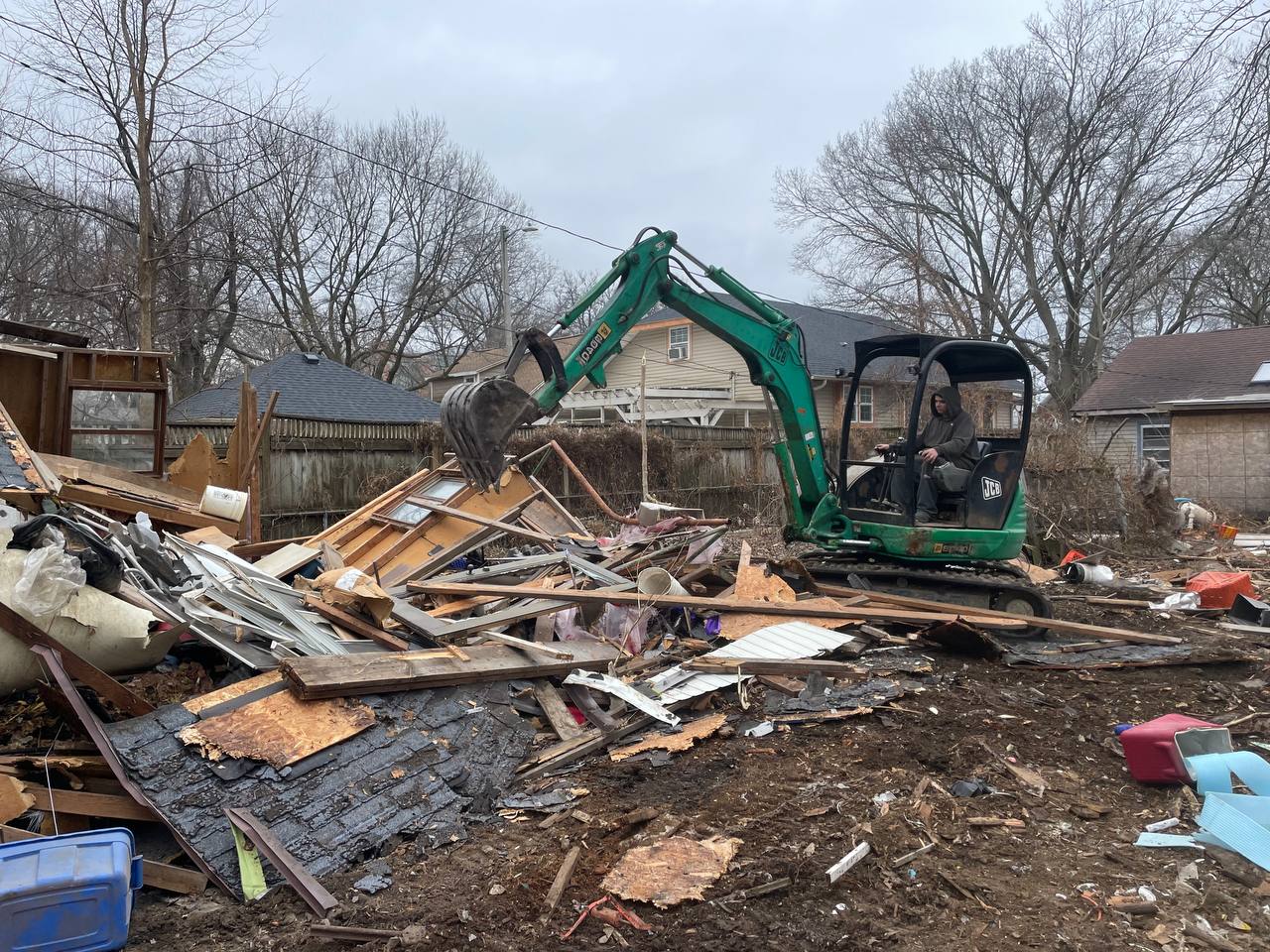
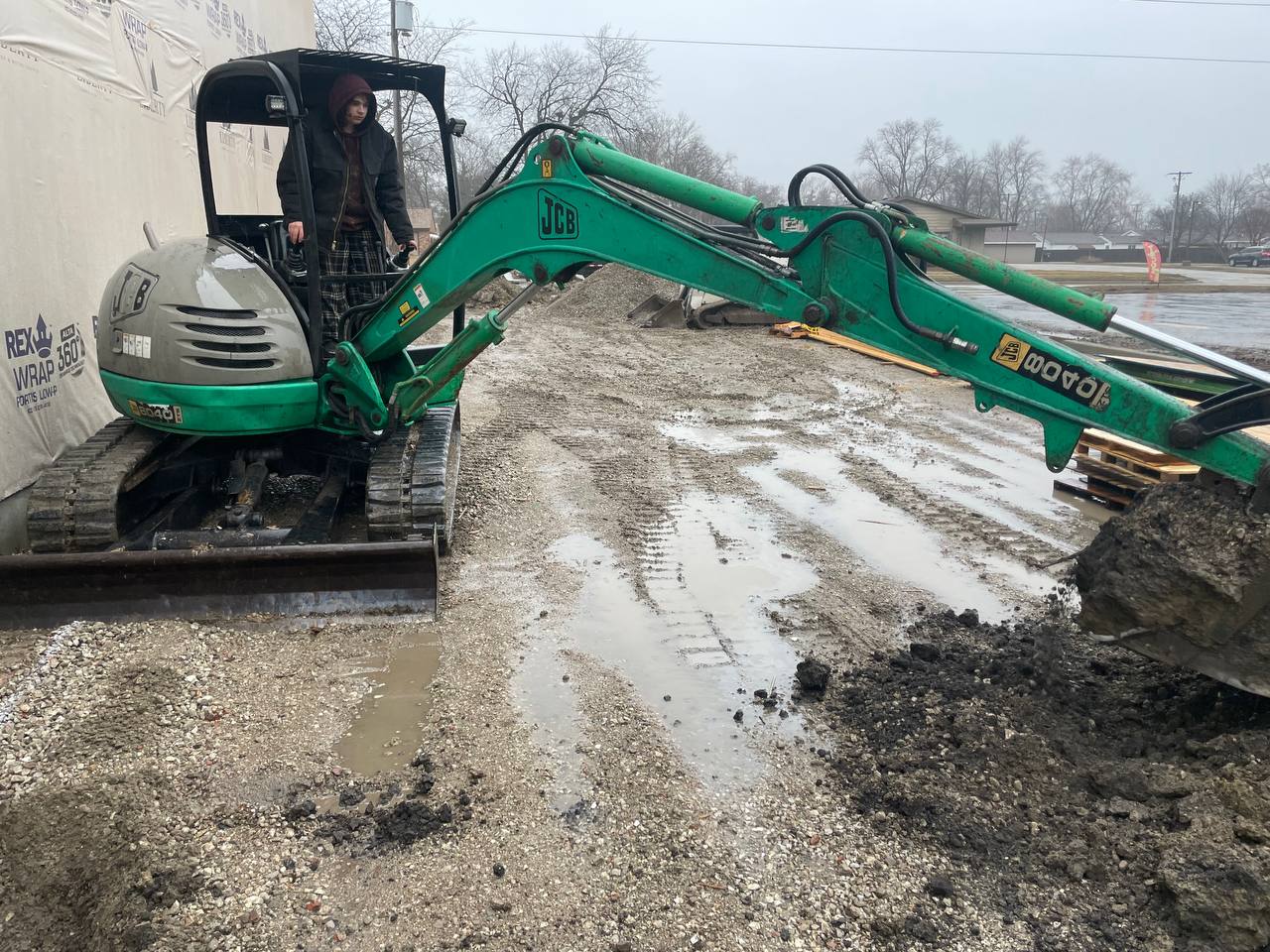
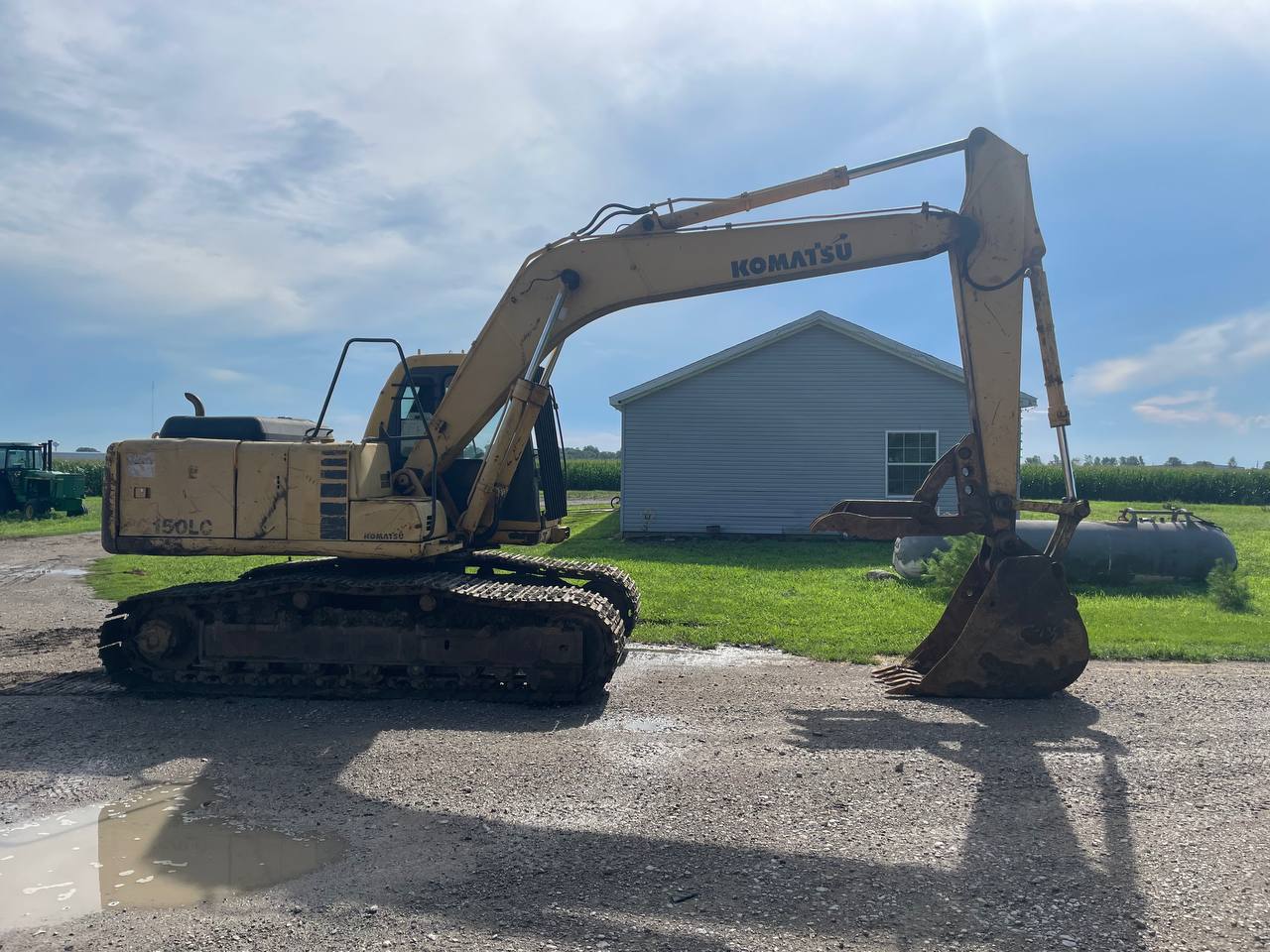

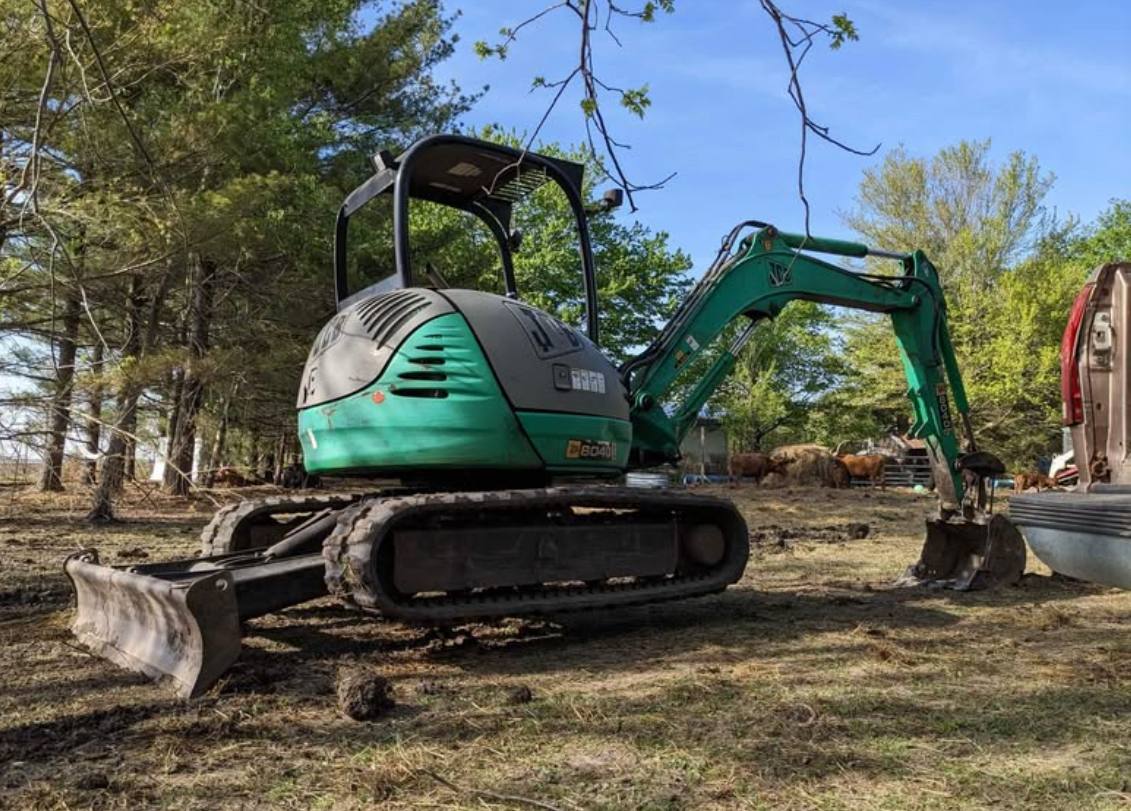


Farm Building Demolition Gallery
Real farm building demolition and farmstead cleanup jobs from around central Illinois.
Corn cribs, hog barns, machine sheds, grain bins, and whole farmsteads — torn down, hauled off, foundations removed, and the ground graded back to farmable. Mattoon, IL — serving a 60-mile radius.
📞 Call (217) 809-0779 Free EstimateNot sure what to send? Here is exactly what to photograph and what happens next — free, no obligation.
Snap it, send it, and we'll tell you what we're looking at.The owner answers — same-day callback.
Call or text and you get Levi, the man running the machine. Not a call center, not a lead broker passing your number around. Reach out during the workday and you hear back the same day.
Old farm buildings that have done their time turn into liabilities — places kids and livestock get into, fire risks, tax lines, and hazards one good wind from coming down on their own. When a corn crib, hog barn, or machine shed is finished, you want it down, hauled, and the ground put back to work.
Right here — call (217) 809-0779. Levi drives out, walks the farmstead with you, and hands you one itemized number. Free, no obligation, inside 60 miles of Mattoon, IL.
Brohez Trucking LLC handles farm building demolition across central Illinois — old corn cribs, hog barns and livestock sheds, machine sheds and implement buildings, pole barns, grain bins, silos, and the leaning outbuildings nobody wants to walk into anymore. This is the umbrella job: one farmstead, one crew, one straight number.
The Komatsu PC150LC handles the heavy work. The JCB mini and Takeuchi skid steer get into tight farmsteads and clean up after. Dump trucks haul the lumber, tin, and concrete straight to a proper disposal site. Whole farmstead to clean dirt is one job, one contractor.
If the place is being settled or sold and the buildings are still full, that's an estate cleanout before it's a demolition — we empty it, then take it down, in one mobilization. And when the buildings are down, the brush, fence rows, and overgrowth around them usually need to go too. Our land clearing rolls right into the same job, so the farmstead goes from cluttered eyesore to clean, workable acres in one pass.
Barns, cribs, and outbuildings put up before about 1980 can carry asbestos in old siding, roofing, or pipe wrap. It's common on farmsteads and it's manageable — it just has to be handled the right way, not bulldozed and ignored.
A farm building is an agricultural structure, not a residence, so it gets no single-family exemption — the pre-demolition asbestos survey and the IEPA 10-working-day notification are required before it comes down, whatever its age. We coordinate both and build the 10-day clock into the schedule. It's worth confirming the specifics with your local IEPA office, and we'll point you the right direction.
Talk to Levi — the man running the machine, not a call center. Call (217) 809-0779.
Most farmstead calls are one of three buildings. They come down differently, and knowing which one you've got tells you most of what the job will look like.
A slatted corn crib is mostly air — light material, a lot of volume, and a roof that's usually the first thing to go. The catch is what's under it: cribs sit on posts or a poured curb, and there's often a concrete drive alley or an elevator pit in the middle that nobody remembers is there until the machine finds it. Double cribs with a center drive take longer than the footprint suggests. The tin comes off for scrap, the wood goes to a roll-off, and the posts and the curb come out if you want to farm through the spot.
Old cribs are also the buildings most likely to be half down already. If the roof has folded or one wall is leaning into the other, don't try to pull it with a truck or a chain — that's how the rest of it comes down on somebody.
A hog barn is the heaviest of the three, and it's heavy in a specific place — the floor. Slatted floors, manure pits, push-off ramps and feed alleys mean there's a lot of concrete below grade, and the pit has to be dealt with honestly: pumped down and cleaned out before anything comes down, then broken up and either hauled or buried below grade depending on what you want and what the site allows. Farrowing and finishing barns usually carry steel penning, feeders and waterers that all separate out for scrap.
If the barn is still on a lagoon or the pit isn't empty, tell us up front. That's a scheduling and a permitting question, not a surprise we want to find on tear-down day.
Machine sheds and implement buildings are the fastest of the three — usually a pole frame with tin on it, an open bay, and a slab or a gravel floor. The variable is the floor and the posts. A shed on a full slab with buried footings is a different job than one sitting on poles in dirt, and thick equipment slabs take real excavator time to break. Old ones often have a shop end with wiring, a compressor line, and a lean-to that got added later.
Lean-tos, open-front equipment sheds, and grain-cart sheds all fall in here too. Anything with a full pole-barn frame is pole barn demolition; a timber-frame barn is barn demolition; bins and legs are grain bin removal.
Clearing more than one of them? A whole farmstead in one job is cheaper per building than three separate trips — the machine and the roll-offs are already there. We'll price it either way so you can see the difference.
Talk to Levi — the man running the machine, not a call center. Call (217) 809-0779.
A central Illinois farmstead is never three buildings. It is three buildings and eight more nobody counts until they are standing in the yard pointing at them. These are the ones that get left off a quote and then cost somebody a second trip.
An old wooden granary is a heavy little building. Two-by-six or two-by-eight walls laid flat and spiked solid to hold grain pressure means there is far more board-foot in it than the footprint suggests, and it does not fold the way a crib does — it comes down in slabs. Most of them sit on a poured curb or a low foundation wall with a wood floor over a crawl space, and a lot of them have a small elevator leg or a spouting run on one end. They are also the building most likely to have been re-sided in tin over the original wood, so a granary that looks like a shed from the road is not one.
If yours is still full or half full of old grain, say so when we walk it. Old grain is weight, it is a bin-entry hazard, and it changes how the building comes apart.
Nearly every older farmstead around here has a milk house even if there has not been a cow on the place in fifty years — a small block or tile building attached to the barn or standing just off it. They are almost always concrete: block walls, a thick floor sloped to a drain, curbs and a bulk-tank pad. That is a small building with a lot of break-out in it, which is why it gets under-quoted.
Two things to know up front. The floor drain goes somewhere, and where it goes is worth finding before the machine is running. And a milk house attached to a barn shares a wall — if the barn is staying, that wall has to be cut and closed rather than pulled.
Chicken houses and brooder houses are light, low, and usually the worst-condition building on the place. Long and narrow, single-wall construction, a shallow slab or a dirt floor, and a roof that has generally been letting water in for a decade. They come down fast. The parts that take time are the roosts and the built-in fixtures, the wire, and old litter on a dirt floor, which is a disposal question rather than a demolition one.
Pre-1980 chicken houses are a common spot for asbestos siding — those little grey shingles — so this is one where the walk matters.
The open-front loafing shed, the lean-to bolted onto the side of the barn, the run-in for cattle out in the lot. These are the fastest buildings on a farmstead and the easiest ones to get wrong, because a lean-to is not a free-standing building — it is hanging on whatever it was added to. If the main building is staying, the lean-to has to be cut loose and the wall it was fastened to has to be closed back up. If the main building is going too, they come down together and it is one job instead of two.
Lot-side sheds usually sit in packed manure and mud rather than on concrete, so plan on the ground being soft and the footprint needing a grade after.
Well houses, pump houses, outhouses, smokehouses, old shop buildings, the propane pad, the fuel tank stand. Individually none of them is a job. Together they are usually a day, and they are the difference between a farmstead that looks cleared and one that actually is.
The well is the one that matters. An abandoned water well has to be sealed by a licensed well contractor under Illinois rules — it is not something you knock the building off and backfill over. We work around it, get it sealed, then clear the site. Old buried fuel tanks are the same shape of problem: found early they are routine, found by an excavator bucket they are not.
Clearing several of these along with the main buildings is the cheapest way to do it. The machine, the crew and the roll-offs are already on the place; a second mobilization for the milk house six months later is not.
Nobody else publishes this. Across 383 competitor pages we checked in August 2026, not one covered a granary, a milk house, a corn crib or a chicken house. Those contractors do commercial and industrial work. We farm the same ground you do.
Every farmstead is different. The basics don't change.
We walk the whole farmstead, talk through every building coming down, check what they're built from, and give you a straight number. No pressure.
Most farm buildings don't need a permit. If yours does, we help sort it out, call utility locates, and arrange to kill any power or water still running to the buildings.
Take out anything you want to keep before we mobilize. Once we start, the building comes down as a unit. Metal is separated for scrap and everything else is hauled.
The Komatsu works each building down in a controlled sequence — cribs, sheds, barns, bins, even leaners. No dropping things toward the house, the bins, or the fence line.
We break out foundations, floors, and old livestock pits, separate metal for recycling, and load lumber and debris onto dump trucks for proper disposal.
We clear the brush and overgrowth, backfill the holes, grade the ground flat, and walk you through the finished work. Clean dirt — ready to farm, build, or seed down.
If it's old, in the way, and shouldn't be standing, we can probably help.
Old slatted corn cribs and grain-storage cribs taken down, posts pulled, foundation broken out, and lumber and tin hauled off.
Hog barns, cattle sheds, and old livestock buildings torn down, concrete floors and pits broken out, everything hauled off.
Equipment sheds, implement buildings, and lean-tos taken down and cleared so you can reclaim or rebuild the spot.
Old pole barns broken down post by post, posts pulled or cut below grade, tin and lumber separated and hauled.
Old grain bins, hopper bins, and concrete or block silos brought down safely, planned carefully, and hauled off.
Classic gambrel and gable timber-frame barns brought down in a controlled sequence, foundation out if you want it, and every bit of it hauled.
Plank-wall granaries and block milk houses — the two most under-quoted buildings on a farmstead — taken down, concrete broken out, and hauled.
Chicken houses, brooder houses, loafing sheds, and lean-tos cut loose from what they were hung on, cleared, and the ground graded behind them.
The whole place at once — house, barns, cribs, sheds, silos, junk, and overgrowth cleared in one coordinated job, right down to the old fuel tanks.
Brush, fence rows, and overgrowth around the buildings cleared so the ground goes straight back to farmable acres.
More on our channel — youtube.com/@broheztrucking · watch on YouTube →
Real farm building demolition and farmstead cleanup jobs from around central Illinois.
Brohez Trucking LLC gives free, on-site, itemized estimates for farm building demolition anywhere within 60 miles of Mattoon, Illinois — call (217) 809-0779. We come out, walk the farmstead with you, and give you one number that already includes the teardown, the debris haul-off, the concrete if it is coming out, and the grading. Hog barns, machine sheds, corn cribs, cattle sheds, milk houses and the leaning ones nobody walks into anymore all count, and it is the same visit whether it is one building or a whole farmstead of them. Metal is pulled for scrap. We cover Coles, Cumberland, Douglas, Shelby, Moultrie, Effingham, Edgar, Clark, Champaign and Macon counties. There is no charge for the visit and no obligation to book the work.
It depends on how many buildings are coming down, what they're built from, whether foundations come out, how far we haul the debris, and access to the farmstead. We give free on-site estimates with a straight number. Call (217) 809-0779.
Yes. Old slatted corn cribs and grain-storage cribs are routine work for us. We take them down, pull the posts, break out any foundation, and haul off the lumber and tin so you can farm or build on the spot.
Yes. Hog barns, cattle sheds, and old livestock buildings get torn down, the concrete floors and pits broken out, and everything hauled off. We grade the spot clean so the ground goes back to use.
Yes. Machine sheds, implement buildings, and pole barns come down post by post — posts pulled or cut below grade, tin and lumber separated, debris hauled, and the pad cleared so you can rebuild or farm it.
Yes, and they are the two buildings most often left off somebody else's quote. A plank-wall granary carries far more material than its footprint suggests and usually sits on a poured curb. A milk house is a small building that is mostly concrete — block walls, a thick sloped floor, curbs and a bulk-tank pad — so it is more break-out than teardown. If either one is attached to a barn that is staying, the shared wall gets cut and closed rather than pulled.
Yes. Chicken houses, brooder houses, loafing sheds and lean-tos are the fastest buildings on a farmstead. The one thing to know is that a lean-to is not free-standing — it is hanging on whatever it was added to. If the main building is staying, we cut the lean-to loose and close the wall back up. If it is going too, they come down together as one job.
An abandoned water well has to be sealed by a licensed well contractor under Illinois rules — you do not knock the well house off and backfill over it. Tell us where it is at the walk, we work around it, get it sealed, and then clear the site. Old buried fuel tanks are the same shape of problem: found early they are routine, found by an excavator bucket they are not.
That's some of our favorite work. A full farmstead cleanup — house, barns, cribs, sheds, silos, junk, and overgrowth — handled in one go by one contractor. We tear it all down, haul it off, and grade the ground back to farmable. Land clearing rolls right into the same job.
Yes. Old grain bins, hopper bins, and concrete or block silos brought down safely and hauled off. Silos can be tricky, so we look at each one and plan it carefully before anything comes down.
Farm buildings put up before about 1980 can carry asbestos in old siding, roofing, or pipe wrap — but age is not what decides the paperwork. A farm building is an agricultural structure rather than a residence, so it gets no single-family exemption: a pre-demolition asbestos survey and the IEPA 10-working-day notification are required before it comes down. We coordinate both and build the 10-day clock into the schedule. It's worth confirming the specifics with your local IEPA office.
60-mile radius from Mattoon, IL — including Decatur, Champaign, Effingham, Charleston, Urbana, Sullivan, Tuscola, Shelbyville, Pana, and Terre Haute.
Pricing depends on how many buildings are coming down, what they're built from, whether foundations come out, how far we haul the debris, and access to the farmstead. We give free on-site estimates with a straight number. Call (217) 809-0779.
If you're inside a 60-mile radius of Mattoon, Illinois, yes. Brohez Trucking LLC clears corn cribs, hog barns, machine sheds, grain bins and whole farmsteads, takes the foundations out, and grades the ground back to farmable throughout that radius — Decatur, Champaign, Effingham, Charleston, Urbana, Sullivan, Tuscola, Shelbyville, Pana, and Terre Haute included. You deal with Levi, the owner running the machine, and travel is built into the estimate rather than added afterward. Call or text a photo during the workday and you get a straight number back the same day. Free on-site estimate: (217) 809-0779.
A 20,000-bushel bin at Greenview, Illinois — 36 feet across, eight rings tall. Steel cut out and hauled as scrap, and the concrete pad left exactly where it sat.
Bins, cribs, hog barns, machine sheds — a farmstead cleanup is usually several of these in one mobilization, with the steel scrapped and the ground put back to farmable.
See how that job went →Brohez Trucking LLC delivers demolition across a 60-mile radius from Mattoon, IL — into Coles, Cumberland, Douglas, Shelby, Moultrie, Effingham, Edgar, Clark, Champaign, and Macon counties, plus over the line into Vigo County, Indiana. Pick your town below for local details, or call (217) 809-0779 for a free estimate anywhere in the radius.
Every one of these is a real Google review from a real central Illinois customer. See them all on our reviews page.
"We hired Levy for a large demo job and dirt removal. They showed up on time, worked hard, and completed the job faster than I expected. What impressed me most was how clean they left the site afterwards — no mess left behind."
"Great Service and Great Price! They continued working for 3 days to demolish three buildings and removed all the debris to dumpsters that I ordered. Then, they also came in with dirt to fill the whole backyard. Strongly recommended!"
"Very responsive, fair pricing, and easy to work with. Did a great job for our project."
Call us and we'll come look at the job. No pressure, no obligation — just a straight number.
(217) 809-0779 📞 Call For Free Estimate Send A MessageHours: Monday–Saturday, 7am–7pm · Mattoon, IL · 60-mile service radius